 |
Strategic News Service, the first paid subscription newsletter on the internet, was started 25 years ago. In honor of our 25th birthday, we're launching FiRe HQ, a new SNS-wide community platform (stay tuned for the big story and all the little details); hosting a monthly virtual FiReSide Event, where members may meet in intimate conversation with global experts and have a chance to interact with one another (see linked ad below and "On Our Radar"); and generally continuing a yearlong celebration to carry us into the next 25 years. This week's treat: The SNS Apparel Shop is officially open for business! And happens to be opening during a 30% discount offer. There are dozens of items to peruse, all elegantly embroidered with the SNS logo. You asked for it, and now you have it. save the date
RESONANCE THEORY: PART II by Mark Anderson Introduction First, an apologia of sorts: to many who read this (second) and next week's Resonance discussions, the series will likely seem disjointed, confusing, and perhaps even misguided. To others, I hope, it will be exciting, daring, revelatory, and inspiring. If you turn out to be in the first group, you might consider chatting up someone in the second. (Resonance I is available here.) Patterns in Physics It is unlikely that the reader will have encountered many, or even any, of the concepts, relationships, or discoveries laid out in this issue. And the reason is simple: they were achieved through the application of pattern recognition in reviewing known physics. This probably sounds pretty tame, but it's actually revolutionary. For example, virtually all PhD physicists, by definition, have had to go through school programs to get their doctorates, and therefore the right to get grants, and to practice and publish in physics. To do this, they had to learn what has been discovered to date, often learning literally the exact idea paths first laid out tens or even hundreds of years ago. Each of these threads has its own story - of wins or losses, rights or wrongs, Nobels or dead ends. And learning, in this way, brought each student to the peak of the pyramid, standing on the shoulders of those people, and on those ideas, from the past. In a sense, this was a pyramid of the hypotheses, or hunches, that had turned out more right than wrong, over time, usually tested by experiment. One of the costs of this system was forced specialization, which tended to restrict the time and ability to take a much wider view across, in this case, physics (i.e., "how the world works"). While specializing is an obvious result of competition, and has obvious benefits in diving deep into subjects, it also has a cost: the nature of discoveries made is also specialized, and tends to be restricted to related hypotheses. The application of pattern recognition to science leads to a radically different view of the same landscape. If we were living in Switzerland, it would be like the difference between hiking up a single mountain with a specialist guide in climbing, say, the Jungfrau, and looking down from the International Space Station. Even from the highest mountain elevations, the guide will never see the patterns obvious to the astronaut. And, just as important, the astronaut will never have the knowledge base of the guide - which route to take, time of year to make the ascent, etc. (If you want to climb the Jungfrau, I definitely recommend hiring the guide vs. the astronaut.) In this and the next issue on the Resonance Program, I'll be sharing a series of what we call Pattern Discoveries - made strictly through the application of pattern recognition to the same landscape available to everyone else. But by using pattern recognition, we will have a view that is fresh, often crazy-seeming at first, and yet that begins to offer a completely different model upon which to see the same terrain. On the downside, I will not (and often won't be able to) provide all of the normal pyramid-like buildup of how we got there; after all, we didn't "get there" by that path. This means that I will have used a different set of checks and tools, regarding patterns made or broken, to evaluate the credibility of each discovery - and this I have done my best to do, usually by consulting with the top people in each field. Exactly how different and exciting can this new pattern view be? In these two issues, I'll share some examples along a couple of different threads, trying to keep things simple, and throw in the occasional (optional) math equation to provide waypoints for professional scientists. But I think readers will see, almost immediately, that these new discoveries will surprise and excite the imagination of everyone looking for a wider view. Resonance II: A New Geometric View All of us are used to the world of three dimensions - four, if we add time. But many non-physicists are a bit soft on the idea of allowing as many physical dimensions as some theories (i.e., superstring or brane theory, and their offshoots) require. But what if there's a different way of seeing these things? What if I suggested that we are missing - or misinterpreting - two-thirds of everything, from a geometrical perspective? What if we are, in a certain sense, only "seeing" in one dimension? Here's a typical illustration of how light moves through "empty" space:
By SuperManu - Self, based on Image:Onde electromagnetique.png, CC BY-SA 3.0, https://commons.wikimedia.org/w/index.php?curid=2107870 In this diagram, which is standard today, the electric E and magnetic B fields are in phase, and this is a lateral wave; as you can see, all of that energy is happening sideways, or in the X- and Y-axes, as the wave travels to the right along the Z-axis. Pretty simple. Now let's note a couple of things. First, the illustrator has chosen Z to represent two different aspects: it is the third dimension in space, and it also represents the axis of travel. These are different jobs, but it's easier to double up like this. Second, light is shown moving along at a given velocity V, which we all know is actually a constant, referred to as C. So, in this drawing that velocity vector on the right side has the value of C. Summary: All of the electric and magnetic energy of light is being expressed at right angles to the direction of travel. We could make a similar, even simpler, drawing for a bullet, or a train going down a track, at a given velocity V. Or you can just picture it as an overlay here, again running from left to right along the Z-axis. We'll talk about matter shortly. Here we go -
It is fair to say that everything we know in physics we know from interactions. While we talk of billiard balls (or electrons), we know about them only from their collisions with other billiard balls (or electrons). By definition, this collision will be happening along the axis of travel, the Z. Does that mean that, in some sense, all of our current knowledge is from the perspective of a single axis, the axis of interaction? While we think of X, Y, and Z as arbitrarily assigned, the axis of travel is not. In other words, when light hits a receiver, by definition the electric and magnetic fields will be at right angles to that collision trajectory. Always. In broader terms, the only way for two things, whether light or matter, to collide is along their access of travel; after all, that is how they collide. This means that all interactions occur only along the Z-axis. So, if we see only what we can measure, and if we can measure only things that collide along the axis of travel, and if these phenomena (light, matter) have different fields and geometries in the X-, Y-, and Z-axes, then --- We are observing only along the Z-axis. What happens when light hits something? Well, it has a physical impact along the Z-axis, with what is called the Compton mass of a photon. But let's be clear: none of the electric or magnetic energy in an electromagnetic wave contributes to the energy along the axis of travel - in fact, that contribution is exactly zero. After all, it is at right angles to Z. On the other hand, if we want to extract electrical or magnetic energy from a light wave, we need to use an antenna, defined as a conductor allowing electrons to move at right angles to the Z-axis. We can get a deeper knowledge of this geometry by looking at how light is created or "destroyed." There are only a couple of ways to do this:
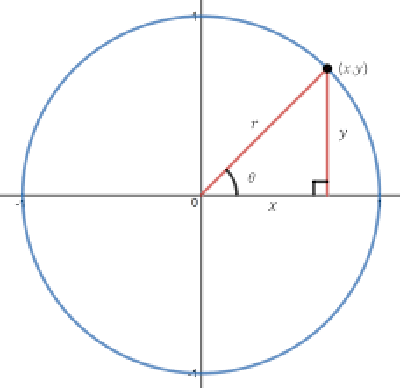
For fun, let's just add this fact: neither matter nor antimatter can achieve the speed of light, whereas light can only travel at this (constant) speed. OK, we're ready for the next section. Let's look at matter. Since we've given light a central role in helping us understand empty space, it would be helpful if we could see matter through the lens of electromagnetic radiation. This is why I mentioned the above tabletop experiment. Maybe, first, there's another way to define light: Light (meaning electromagnetic radiation) is space(time) in a unique form of resonant perturbation of space itself. When we're seeing light, we're seeing space in an activation state determined by its own properties. If we hark back to the summary of Resonance Theory I: "The laws of physics are the direct derivatives of the properties of otherwise-empty space." In a certain specific sense, light is space. __ Let's go deeper into this Interaction Theory: If what we know is completely determined by experimental observation, then we can quickly agree that this is completely defined by the interactions of one or more things with another. We don't measure billiard balls; we measure the results of the collisions of billiard balls. We can only observe interactions. This changes how we see everything. Soon, we're going to stop talking about billiard balls (electrons, protons, etc.) altogether, and talk instead of the interactions that allowed us to define these phenomena, made of space. What is matter? Here's a simple way to look at it, thanks in part to Richard Feynman, whose diagrams and mathematical brilliance (along with that of Tomonaga, Schwinger, and Dyson) helped us understand these things: Just as light is created by touching, say, an electron and a positron together, these forms of matter can be spontaneously created by light splitting into each. Amazing, eh? (If you're really interested, look up Feynman Diagrams.) So here we have a fascinating conundrum, right at the center of light and matter. They are interchangeable, essentially spontaneously, and yet operate by very different rules - with regard to velocity. Now, it's time to say the next sentence very clearly: Perhaps velocity - the hub variable of Special and General Relativity and many, many other equations in physics - is not what we think it is. Let's go back to our diagram of light, and ask: How would we overlay matter on this? First, we know that matter can have velocity, defined here as along the Z-axis, but that it can never reach C. An electron, or positron, can move along from left to right, until it collides with something else. When it does, we learn things like its mass, momentum, velocity, energy. Just as with light, the same geometries apply: we learn only through these interactions, and all of them happen along the Z-axis. Further, given this fact about matter and antimatter annihilating to make light, we also know that, while the internal geometry of light and matter are different, they are also tightly related. After all, one can make the other, and vice versa. This suggests that the geometry of matter and antimatter is completely contained in the geometry of light, and that the geometry of light is completely contained within the geometries of matter and antimatter. And this suggests that, like light, matter is asymmetrical when comparing the X,Y plane with the Z-axis. Since we learn only from interactions along the Z-axis, we again face the same interesting question: If we see only what we can measure, and if we can measure only things that collide along the axis of travel, and if these phenomena (light, matter) have different fields and geometries in the X-, Y-, and Z-axes, then --- We are only observing along the Z-axis. It's at this point that you're wondering if you're crazy or if I am, or both. I was. So, I decided to talk to a friend of mine, Oliver Morton, at that time the chief editor of the journal Nature, one of the top two science journals in the world. But first, I have to explain something about scientists, and about physics and physicists in particular. If a physics theory is not wrong, it is considered to be right until proven wrong. For that reason, if it is agreed to be "possible," that puts it into the "right until proven wrong" category. It doesn't mean it is really right - only that the person talking has no knowledge of anything that would prove it wrong -- Picture Home House in London, after an event held by SNS in this private "entrepreneurs' club." Oliver and I were upstairs, sitting by the fire, each with a glass of something. (I thought this would be helpful in creating open minds.) Here I was, friend or not, about to ask him one of the most ridiculous questions he will have ever heard. I explained the idea in all its strange simplicity, laid out in the same way as above, keeping in mind that this could either cast doubt, or possibly at least a new light, on almost every experiment done since experiments began. "What do you think?" I asked. Oliver was quiet for a few moments, but not for too long. "It's possible," he said. __ Since the discovery of both quantum mechanics and relativity theory, early in the 20th century, the two have lived in an uneasy truce, despite best efforts to unite them. But they share an interesting characteristic regarding the observer: in relativity terms, everything observed is affected by the observer's relative velocity; and in quantum, the observation is part of the event being observed. There, too, the result is affected by the observer's status. I'm mentioning these shared characteristics to help alleviate any shock that may have come from the above suggestion that we introduce the geometry of the interaction along the axis of travel as an inherent bias in past experiments. I later asked John Cramer, Prof. Emeritus in Nuclear Physics at the University of Washington, the same question. He, too, said, "It's possible." What do we know about velocity? We know from our top diagram that velocity occurs along the axis of travel - in this case, Z. We know that light travels at the constant C, providing a centrality to itself that Einstein and everyone else has used and noted. We know that other parameters, such as mass, time, and distance, are affected by the observer's relative velocity; and that non-luminal particles can approach, but not reach, C. We tend to express velocity as distance over time, and we're locked into this view. Is there another way to see and/or express velocity? Let's go deeper. Here is the first, rather amazing, clue: although C is usually expressed in meters per second (3 x 1o to the 8th), it is equally well represented by the square root of the inverse product of the inherent electric and magnetic properties of space, something that was known even before Maxwell's time: C = ( εoμo ) -1/ 2 where εo is the electric permittivity of free space - (8.85 x 10⁻¹² F/m) How can a velocity, even a constant one, turn out to be equally well expressed, not in distance per second, but in electric and magnetic terms? While this has been known for over 100 years, it provides the "pattern broken" that we need to see in order to realize that we're seeking a new way to understand velocity. (For more on this, go to Resonance I.) As I worked on the patterns behind Special Relativity, I came up with a remarkably simple geometrical representation of these equations, represented as circular functions, and contained in a single drawing. Here it is, in its most basic form, for our use in this discussion:
Here, r is the radial arm, which can move in the upper right quadrant from flat to vertical; x is the projection of that arm onto the X-axis; and y is the projection of that arm onto the Y-axis. The position of the radial arm r is described by the angle, theta (ϴ). Now, all we have to do is define terms. To completely describe the core (Lorentz) equations of Special Relativity, we will label these three variables accordingly: r = 1.0, a constant; mass, as m0/m (rest mass over observed mass) If you're a kid, all you would have to know is that as the arm swings up toward vertical, velocity is increasing toward the speed of light; and, as that happens, observed mass is greater, distance shrinks, and time extends. This is so simple, I realized you could teach an 8th-grader relativity in just a few minutes - as described in an earlier SNS. As the founder of SNS Project Inkwell (https://www.projectinkwell.com/), I've spent years thinking and brainstorming about K-12 education with SNS member companies. (The US Department of Education later adopted our charter findings as its own.) If society is going to move forward, I believe we need to stop teaching the same things in 8th grade that we did in 1960. Clearly, we're going to need to teach quantum mechanics and special relativity to middle-schoolers, in much better ways, instead of waiting until their postgraduate years. So, using my newfound diagram, I made a bet with my son's teacher that I could teach the whole class Special Relativity in 10 minutes - including two minutes for the quiz, which all of them would pass. Of course, it worked. Years later, after sharing this with my friend (and SNS member) Scott Biddle, a retired aerospace CEO with a great shop, Scott offered to make a prototype out of 3D-printable plastic that we could give, free, to middle-schoolers. (You can see what we ended up calling "The Gadget" in the "On Our Radar" section below.) I decided to double-check the relativity math for The Gadget with my friend (and SNS member) Murray Cantor, a mathematician of renown. After he confirmed the math, I asked him my deeper question: was he aware of anyone else who had found this simple geometry behind Special Relativity? Murray noted that John Wheeler, perhaps the best-known person after Einstein in the field of General Relativity, also believed in this circular geometry as a real thing. Murray thought that perhaps one-third of physicists today agreed with Wheeler's interpretation. "Did you know Wheeler?" I asked. "Yes, I knew him well," Murray said. "In fact, I married his secretary. He didn't talk to me so much after that; I think it affected our friendship." __ One of the most amazing things about The Gadget, and the geometry behind it, is that it seems to be telling us something unexpected about velocity. Velocity is an angle. Now, I don't mean that it isn't also measured, in the day-to-day Newtonian world, as miles per hour - but perhaps that is an approximation, at low relative speeds. What do we really know about velocity that applies at all speeds?
There were a lot of things I didn't like about this idea. First, it was crazy-sounding - I didn't see how it could make sense, or be applied in "the real world" that I knew about. Second - well, it didn't fit anything else I'd read or seen. Even worse, it would seem that not only did Einstein, who based everything on velocity, miss it; but it also likely violated one of his most sacrosanct proposals, having to do with the equivalence of all frames. (What is true for one observer should be true for all.) I decided to ask John Cramer about this, and went to visit him in his lab. "John, is there anything in physics that would suggest that velocity is actually a real angle?" I asked. If velocity were an angle, that would change, well, everything, giving all of physics a new geometrical interpretation. Without hesitation, he said: "Sure. The spin of an electron in a linear accelerator, as it passes the observer, has an angle which defines its relative velocity." I was stunned.
In Resonance III, next week, we will discover how a French lieutenant's artillery problem led to the most important term in physics, and how we can use this new geometrical view of velocity and interactions to unify some of the most important concepts of how the world works. Finally, I'll share The Russian Doll equation, to bring everything a new level of scaling.
Your comments are always welcome. Sincerely,
To arrange for a speech or consultation by Mark Anderson on subjects in technology and economics, or to schedule a strategic review of your company, email mark@stratnews.com. For inquiries about Partnership or Sponsorship Opportunities and/or SNS Events, please contact Berit Anderson, SNS Programs Director, at berit@stratnews.com.
"I canceled talks with China. I don't want to talk to China right now."
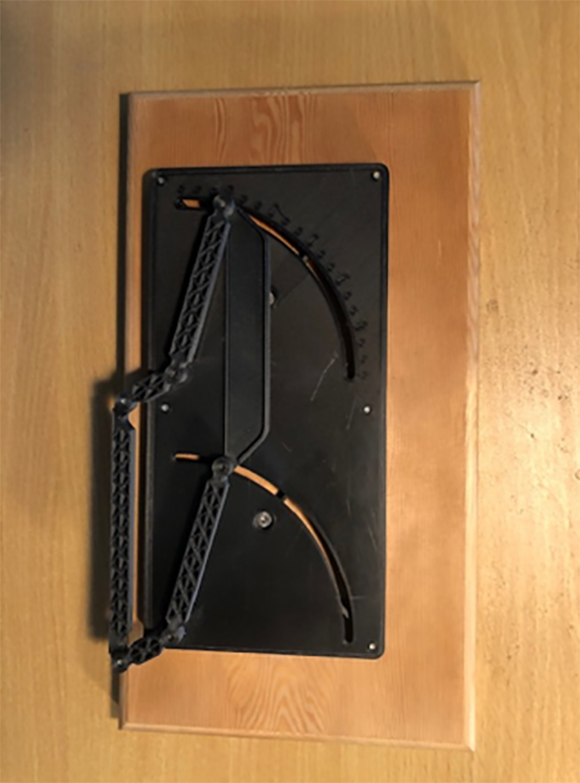
"The Gadget": A prototype for teaching Special Relativity to 8th-graders The Gadget below is set to a relative speed of that approaching light, as shown by the radial arm pointing almost straight up. You are seeing The Gadget from the back, where all the mechanicals are; the front would have a magnetic screen attached with real numbers to show relative velocity (by angle), and the resulting values of mass, time, and distance.
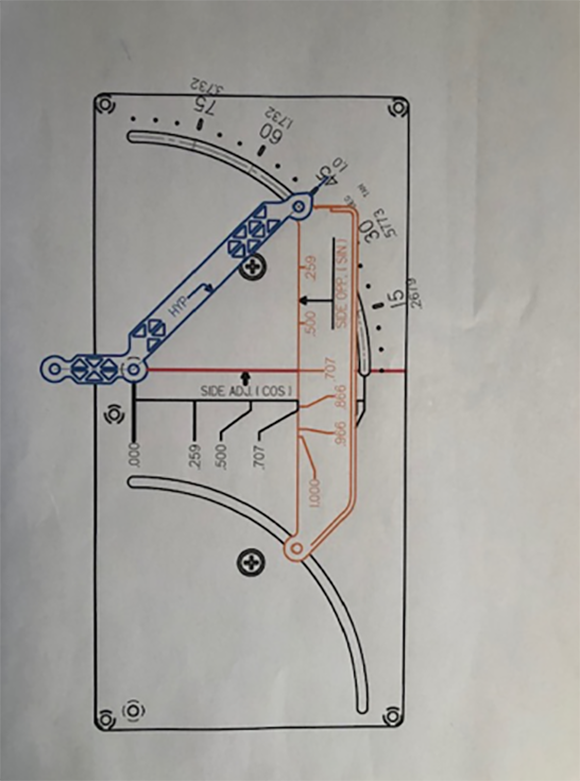
A diagram of same:
Credit for both the prototype and the drawing go to Scott Biddle.
August: "Disruptive Energy Futures"
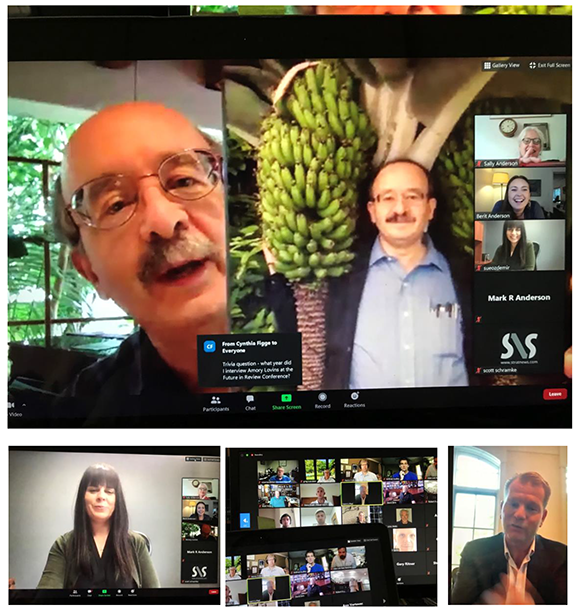
Interviews with Amory Lovins, Joern Tinnemeyer, and Sue Ozdemir
Top: Avery Lovins, Co-Founder and Chair Emeritus of the Rocky Mountain Institute, shows SNS members an example of his solar-powered banana bunch #78. Bottom: Sue Ozdemir, CEO, Exro Technologies; a select Rogues' Gallery page of attendees; and Joern Tinnemeyer, SVP and CTO, EnerSys. Click here to visit the full "Disruptive Energy Futures" FiReSide Gallery Click here to register for September's FiReSide, "QAnon & the Fight for Truth"
This section highlights current stories regarding the global theft of IP - or, Who's stealing from whom? For more on the SNS INVNT/IP division and how your company can get privileged access to our information, go to www.invntip.com.
China The Department of Justice's National Security Division Chief Addresses China's Campaign to Steal U.S. Intellectual PropertyFBI warns American businesses to stop dealing with Chinese companiesUniversity of Kansas chemist Feng 'Franklin' Tao's attorneys move to dismiss charges for fraud and false statementsChina is 'greatest long-term threat' to the US, FBI director Christopher Wray saysReport: Chinese Hackers Target Taiwan's Semiconductor IndustryTaiwan accuses Chinese hackers of aggressive attacks on government agenciesHow the Chinese Communist Party steals scienceThe Politics of China's TechCarriers Get Extension to Rid Systems of Chinese Technologies
North Korea CISA warns of BLINDINGCAN, a new strain of North Korean malware
Company Interest Qualcomm Wins Antitrust Appeal, But Why?Donald Trump cancels China talks, raising questions about trade deal
Re: SNS: Chips in Chaos
Mark, As an investor in the semi and semi equipment space since 1983 let me say the article was as simplistically brilliant as it was scary. Regards, Ricky Solomon Managing Partner
It is as amazing as it is believable. Mark, Berit, and Evan, That was a truly+terrific FiReSide. I learned a lot and was inspired. I promised Amory [Lovins] a link to my interview by Peter Denning for the ACM on the topic of "resilience" what simple measures - technological and social - might make civilization more robust against the hard knocks of fate? And yes it's related to today's SNS issue.
Thrive & persevere. David Brin [Author and Physicist
John Petote [Founder, Santa Barbara Angel Alliance,
Subj.: FW: interview request for story about hydrogen powered vehicles Mark, For your non-amusement: Add this to your infinite list of Chinese IP theft*. What are the Chinese characters for "F*** YOU"? They have already ignored my Purdue-owned IP and have prototypes of that technology ready for market. So, since US tech companies shun revolutionary tech development in favor of evolutionary tech development, the US will be buying my technology from China. What else is new? Jerry Woodall
From: chris palmer Hi Dr. Woodall, I'm a U.S.-based writer putting together a story about recent advances and news related to hydrogen powered vehicles. The story is for an English-language journal called Engineering, published by the Chinese Academy of Engineering. I would like to interview you for my story. Would you be available to speak with me later this week or any time next week of Aug 17-21? Also, could you recommend any colleagues or peers that might be able to speak with me about recent developments regarding hydrogen fuel cell vehicles?
Best, Chris Palmer, PhD
Jerry Woodall
Subj.: Re: The Art and Science of Predicting Mark, Just had a moment to read this issue on an airplane today. Yup, a real airplane. And I realized I finished runner up [in the contest for a lifetime subscription to SNS]. $80,550 for first and $0 for runner-up? LOL. Congrats on 25. John Rydell
John, After some discussion, and reading this plaintive note a couple of times, I realize we have not only been responsible for a massive injustice, but also have unwittingly contributed to the ongoing wealth inequality of our wonderful country. To rectify all of the above, we would like to offer you a $100 complimentary certificate to all of the very cool swag in our new SNS member store. Please confirm your interest in accepting this belated gift, and we'll make it happen. And thanks for being a member. Sincerely, Mark Anderson

* On September 24, Mark will be hosting the next virtual FiReSide Event, "QAnon and the Fight for Truth." Registration open, with speakers to be announced.
In between times, he will be firing the canon.
Copyright 2020 Strategic News Service LLC "Strategic News Service," "SNS," "Future in Review," "FiRe," "INVNT/IP," and "SNS Project Inkwell" are all registered service marks of Strategic News Service LLC. ISSN 1093-8494 | |