 |
RESONANCE THEORY: PART VI The Cosmos: Motivating Force and Organizing Principles By Mark Anderson Dedicated to my friends Murray Cantor and John Cramer, and in honor of James Cronin. While the work using Resonance Theory will likely never be complete, this issue provides at least a parenthetical close to the series begun in 1979 at the smallest level, bringing us back to something even smaller - the nature of space itself. We began the Resonance Programme by understanding space through applying conservation laws to electromagnetic radiation along its axis of travel, then using this to show the inherent geometry and properties of empty space and of charged particles and anti-particles. We ended Resonance I with the sentence: "The final conclusion of the theory must be that the properties of physical events are the properties of space." And we ended Resonance V with the understanding that "[t]he Story of the Cosmos is indeed the story of space dancing with itself." In today's discussion, we'll move past the now-outmoded Big Bang theory and look at what forces are driving the interplays of energy in space. This should give us a series of pathways for a much richer and more productive understanding of the myriad questions raised by the new view of the cosmos described in Resonance V. By redefining the interpretation of the Hubble red shift to be based - in part, if not altogether - on the effects of spatial density, we now can suggest that either there was no Big Bang at all, and there is zero expansion of the universe, or at the least, that this expansion is less than currently calculated. Since our view is that the whole Big Bang idea has now been replaced, the obvious question arises: What are the motivating force and organizing principles that drive space as it interacts with itself?
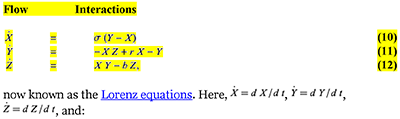
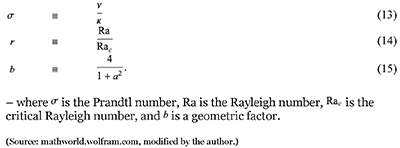
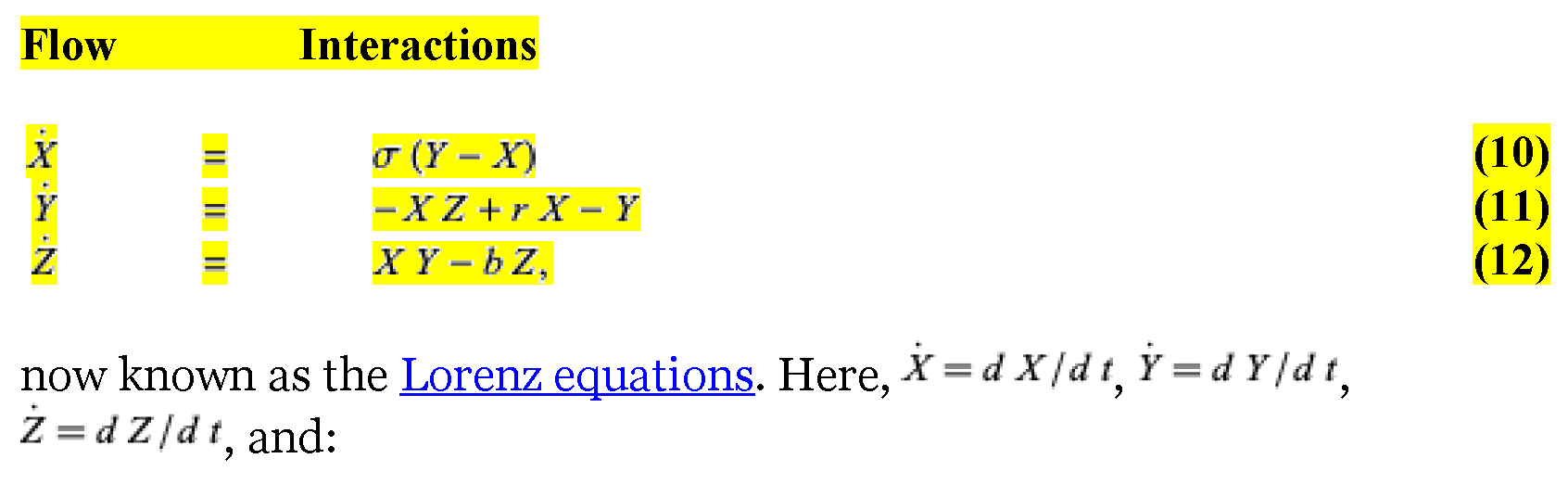
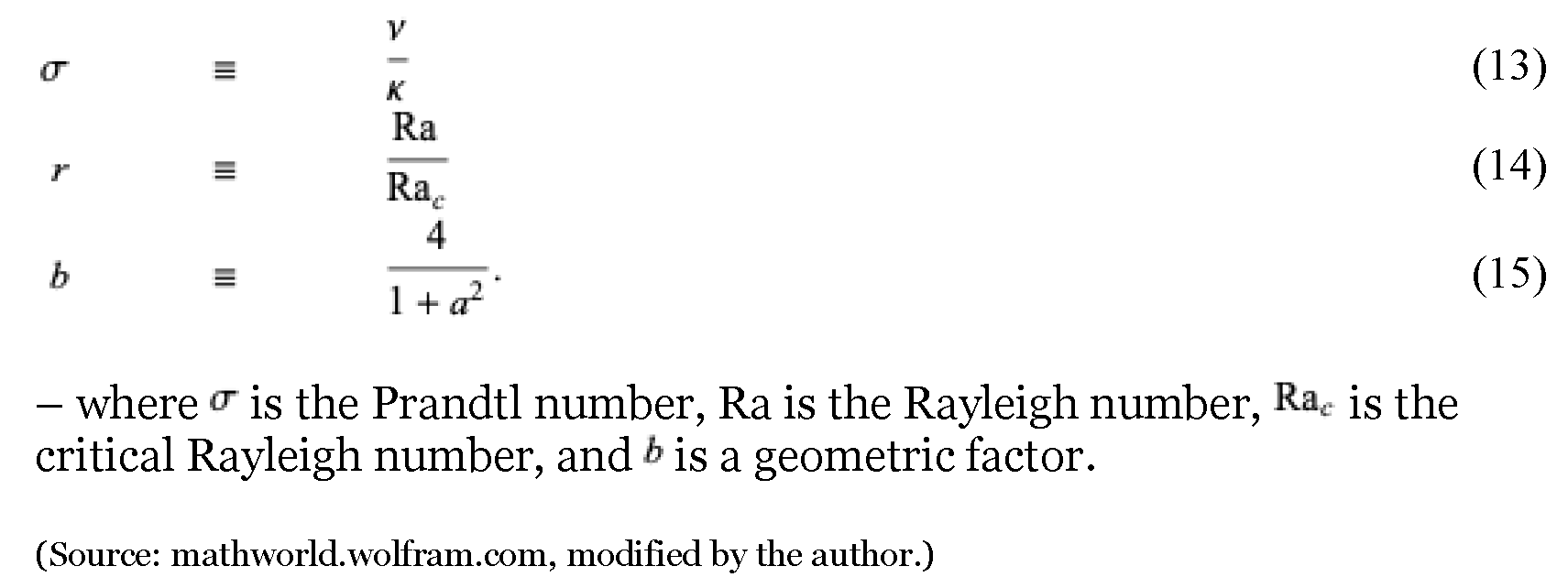
The Cosmos: Motivating Force and Organizing Principles I. Motivating Force While all of the prior work in the Resonance series published by SNS is the result of pattern discoveries made in looking at the mathematics and science of physics per se, we now must make a distinction: the proposals in this discussion are the result of pattern discoveries made against the overall processes of nature. Since we have already demonstrated that all things in nature are "made" of space itself, and that the laws of these things (physics) derive directly from the physical properties of space, this approach appears to have a solid logical platform. One can hope that the next steps will be direct experimental confirmations of these proposals. How does space behave? In other words, if all the events and things we see in space are not the result of a single mammoth explosion, then what is driving the universe as it changes? Let's start with what we think we know: that space itself has resonant characteristics, which lead directly to the existence of persistent matter and of the phenomenon of electromagnetic radiation. Given these characteristics, and knowing that we can only "see" about 5% of the matter and energy in the cosmos, where are we to start? Let's begin with the other 95%, in answer to the questions not just of dark energy and matter, but also of how space behaves when its spatial density is below that required for creating persistent matter and/or electromagnetic radiation. As noted earlier, we don't feel the need to use quantum foam, etc., as an unprovable device, but rather, would look to this issue of energy density in space as the limiting set of parameters regarding such events. What is the energy status of space in locales of lower density? To see this clearly, we must turn to the concept of emergent behaviors. Since we no longer have need for an unexplainable, explosive beginning to the universe, we must look elsewhere for the drivers behind space phenomena. Fortunately, nature has provided us with this information through the shared patterns of behavior we see across virtually all events. Instead of a centralized, explosive view of the history and resultant behavior of the cosmos, we will turn to a more infinite, and inherent, view: that there are emergent behaviors that result from the combination of total energy per volume in space and the resonant characteristics of space. These lead not to quantum foam, but to a similar view of energy in various forms, interacting with one another in any given local volume. The resonant properties of space provide the insight into whether these chaotic, ongoing interactions pass a local threshold of stability - i.e., time persistence. Enough energy in a small enough volume, and we see the emergence of what we call matter (vs. dark matter or dark energy), such as an electron or a positron. This brings us to a rather important question in physics over the last century, raised by NASA chief scientist Dennis Bushnell after the publication of Resonance V and by many other scientists over this period. Why is there more matter than antimatter? We know, thanks to James Cronin's work, that space itself contains an unexpected asymmetry in its geometry, leading to parity and charge-conjugation / parity-transformation (CP) - and, later, also time-reversal (CPT) - violations. From our new view, we not only are unsurprised, but we would also insist that the inherent geometries of (empty) space be represented in events and interactions that are emergent from it. Without answering the deeper question of why space is like this, I believe this is the reason behind such matter asymmetry. The deep geometry of space and its self-interactions we will leave for another day. How are we to understand, and use, this new view of emergent behaviors as the motivating force behind the cosmos? We will need a new set of tools and interpretations. The emergent behaviors of complex systems are already well-described today by the field of complexity mathematics. As with fractals and the Mandelbrot set, or the Lorenz attractor, this mathematics and its related (chaos) theories scale perfectly across all ranges of size and extension. If the conclusions of Resonance V are correct, we would expect the science and math of emergence to replace that of the explosive Big Bang theory. We know, after all, that the science of biology derives directly from the emergent properties of chemistry, and chemistry in its turn from the emergent properties of physics. Now, we are going down one more scale, suggesting that the same is true in moving from space itself to physics. And at this level, we find the same principles at work, from dark matter and dark energy, through electromagnetic radiation and persistent matter, to the scale of the cosmos. Now let's move forward and ask: Assuming that emergent forces are the motivating forces of space at the level of its most basic self-interaction, what are the organizing principles inherent to this system? SNS members may already be aware of our long-term work leading to the discovery of Flow and Interaction as the fundamental theory underlying complexity mathematics. For those who are not, here's a short description, followed by references at the end of this paper: Like the current versions of string theory, complexity mathematics was discovered from a mathematical perspective without the benefit of an underlying fundamental connection to the world. And, much like the former, the latter has grown with the excitement driven by its inherent mathematical beauty and power, but again without a fundamental grounding in the physical world. In the case of complexity, there are many obvious applications, from J. Doyne Farmer gambling in Vegas casinos (see The Eudaemonic Pie) to hurricane predictions by Edward Lorenz to attempts to predict financial markets. Here are the three basic Lorenz equations: Lorenz included the terms
- where X is proportional to convective intensity, Y to the temperature difference between descending and ascending currents, and Z to the difference in vertical temperature profile from linearity in his system of equations. From these, he obtained the simplified equations:
I had been searching for the fundamental theory underlying the predictive power of complexity mathematics for about 25 years. My first insight was based on successful applications of chaos theory in three areas: timing of drops falling from a rusty faucet, onset of cardiac arrest in arrhythmic heart patients, and the shape of leaf edges. In all three, it struck me that the primary shared driver was flow: of water over uneven surfaces, of blood through unevenly blocked arteries, of the growth hormones in leaf veins called gibberellins. I checked this with the then-president of the Santa Fe Institute and got a strong "Perhaps" in response, which was enough to keep me searching for the next 20 years. It later occurred to me that I was missing a complementary variable to flow, and from the above and other examples, it seemed to be "resistance" - provided by rusty pipes, clogged arteries, or vein constrictions in leaves. (If you're wondering what this has to do with physics and the cosmos, we're about to get there.) I first met Murray Cantor in 2016, when he gave a dinner keynote on complexity theory for a group we founded called "Undiagnosed," or UnDx, one night in San Diego. Murray showed the three Lorenz equations, and I immediately asked if they represented Flow and Resistance, and he immediately responded, "Absolutely." He proceeded to explain, for each of the three, how those roles were being played. By the end of that evening, we had refined those words to Flow and Interaction, and we had completed the search for a fundamental theory behind complexity and chaos mathematics and cemented a connection to emergence. Flow and Interaction are the organizing principles that describe, and govern, the actions of an emergent physical world. You can read about global experts' successful applications to 11 different fields in the first book on this subject: The Universal Powers of Flow and Interaction: Applying the Two Fundamental Actions Behind Every Element of the Universe (FiReBooks, 2017) (This book also contains Murray Cantor's declaration that Flow and Interaction successfully describes "everything - everything in the universe!" and Curtis Wong's enthusiastic, "You have achieved what Leonardo aspired to!") IV. A More Appropriate Scientific Method It happens that, in time to help us with this new view of the cosmos, we also have a new way of doing its science. In place of the old hypothesis-based testing regime called the Scientific Method, we'll flip this into reverse, running pattern-recognition tools against the data of the heavens, in order to make major pattern discoveries about the universe. While this sounds suspiciously like just calling upon AI, I will suggest that deep neural networks which, themselves, also require initial parameter settings or hypotheses will not be of much use here. Rather, purpose-built systems and mathematics focused upon Pattern Discovery will lead the way. These could partially include DNNs, CNNs, and other neural nets and algos, but will not require, nor be limited by, our own hunches or beliefs. In this way, we can hope to rapidly make the transition from the language and memes of yesterday's incomplete and limited views to a large-scale, pattern-based research programme underpinned by the understandings of Resonance Theory. (Full disclosure: As the founding CEO of Pattern Computer Inc., I am biased on this issue, having already experienced the breakthrough abilities of such a system.) We now have a fundamental theory and a mathematics that can replace the inexplicable Big Bang theory and its incorrectly interpretated expansion and distance figures - and the alternative, now-discarded Steady State theory - with something new: a dynamic, ever-changing, yet predictable and understandable universe. Your comments are always welcome. Sincerely,
Mark Anderson
Notes
Related Media Resonance Theory Series: FiRe 2017: Evolving the Two Elemental Actions: Flow and Interaction - Mark Anderson and Paul Sallomi Flow and Interaction - Mark Anderson and Denyse Davis Flow and Interaction: Talks at Google - Mark Anderson with Benjamin Smarr ____ Email sent to SNS may be reprinted, unless you indicate that it is not to be.
Strategic News Service, the first paid subscription newsletter on the internet, was started 25 years ago.
To arrange for a speech or consultation by Mark Anderson on subjects in technology and economics, or to schedule a strategic review of your company, email mark@stratnews.com. For inquiries about Partnership or Sponsorship Opportunities and/or SNS Events, please contact Berit Anderson, SNS Programs Director, at berit@stratnews.com.
CLICK TO REGISTER for fire 2022!
SAVE THE DATE! PREDICTIONS 2022 Mark will be presenting his annual Predictions for the Coming Year, virtually, on Thursday, December 9, at 2:30-4:00pm PT
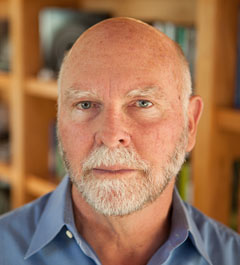
Craig Venter | Founder, Chair & CEO, J. Craig Venter Institute Member Type: Creator
J. Craig Venter, PhD, is regarded as one of the leading scientists of the 21st century for his invaluable contributions to genomic research. He is founder, chair, and CEO of the J. Craig Venter Institute (JCVI), a not-for-profit research organization with approximately 200 scientists and staff dedicated to human, microbial, plant, synthetic, and environmental genomic research and the exploration of social and ethical issues in genomics. Craig is also a co-founder of Synthetic Genomics Inc. (SGI) and Human Longevity Inc. (HLI). SGI is a privately held company developing products and solutions including sustainable bio-fuels, vaccines, biotherapeutics, and transplantable organs. HLI is a genomic-based health intelligence company empowering proactive healthcare. Craig began his formal education after a tour of duty as a Navy Corpsman in Vietnam from 1967 to 1968. After earning a BS in Biochemistry and a PhD in Physiology and Pharmacology from UC San Diego, he was appointed professor at the State University of New York at Buffalo and the Roswell Park Cancer Institute. In 1984, he moved to the National Institutes of Health campus, where he developed Expressed Sequence Tags, or ESTs, a revolutionary new strategy for rapid gene discovery. In 1992, Craig founded the Institute for Genomic Research (TIGR, now part of JCVI), a not-for-profit research institute, where in 1995 he and his team decoded the genome of the first free-living organism, the bacterium Haemophilus influenzae, using his new whole genome shotgun technique. In 1998, he founded Celera Genomics to sequence the human genome using new tools and techniques he and his team developed. Craig is the author of more than 280 research articles. He is the recipient of numerous honorary degrees, public honors, and scientific awards, including the 2008 US National Medal of Science, the 2002 Gairdner Foundation International Award, the 2001 Paul Ehrlich and Ludwig Darmstaedter Prize, and the King Faisal International Award for Science. He is also a member of numerous scientific organizations, including the National Academy of Sciences, the National Academy of Medicine, the American Academy of Arts and Sciences, and the American Society for Microbiology. SNS Connection: Craig Venter was the Opening Night speaker at FiRe 2008 ("An Ocean of Genes: The CAMERA Project") and FiRe 2012 ("From Reading to Writing the Genetic Code") - making him one of just two speakers in FiRe history to be invited twice to this role of honor. We'd love to find out what he's up to today - at FiRe 2022, if his schedule permits. Craig is also co-author of a soon-to-be-released book on Earth's microbiome, co-authored with science writer and frequent FiRe & FiReSide host David Ewing Duncan. Stay tuned for both events. See recent iNews media referencing Craig See Craig's available FiRe photos
Re: SNS: RESONANCE THEORY: PART V: Reinterpreting the Cosmos Subj.: re the omniverse
Mark, I had mentioned I would respond to your discussions on Resonance and am sorry I have been slow to respond --- In resonance, I have considered the physics of the universe as discussed by lay to expert observers to be nonsense largely because it uses the lab models of elements, molecules, metals, energy levels, polarity, etc. Fundamentally, the incredible power and journey to equilibrium after the initialization of what became what we see could not be the basis of what we observe. The high school physics picture cannot have any part in the representation of the universe. Dark matter and dark energy are the same kind of crutches that basic particle physics has used to make the nice neat picture of materials, supposedly elemental particles, different forms of energy, etc. Fundamentally we have no idea what the universe was made of and in what form at the time of its birth. Any application of current physics to the events that happened during the birthing is nonsense. The form could not have been matter or a single form of energy but rather was a massive collection of energies in different frequencies seeking equilibrium in a space surrounded by unlimited number of other such entities seeking a similar state. A key point is that the most fundamental principle even this environment would experience is that anything active will seek equilibrium until it finds it. What constitutes equilibrium is not a steady or stable state but rather a level of harmony with the occupants of the space who were seeking their own level of equilibrium and on and across space and at distances we cannot imagine. This infinite collection of fragments of the destabilizing initial event called the big bang, another childish image, have been working on equilibrium since second zero and it will continue for an infinite time unless all occupants find a place in a total equilibrium. I see no way this could ever be reached but I do see large collections of similar fragments finding companions as their seeking of equilibrium together helps them. This is how a large collection of such entities could be what we call dark energy or matter or some of both existing in proximal harmony. There is not dark matter or energy but aggregates that are the same except for how they interact locally. Trying to represent either of these with high school Newtonian models with weak and strong force is nonsense. If the universe was made up of anything other than different frequencies and amplitudes of resonance fragments constantly seeking equilibrium with their surroundings, we would not see the incredible diversity of fragments and behaviors our limited observation method[s] already show. The homogeneity and versatility of action requires a universe with components capable of mutation, reaction, partnering, resisting all from a single form of existence and behavior including the ability to create fragments whose form of equilibrium could involve millions of cubic light years of companions and anything we would do to look at them would be disabled by their form and size. In addition, this view makes gravity the basis of seeking equilibrium and implies it would be different everywhere. Which could be tested with a large computer able to work in hundreds of dimensions...... I am fully incapable of representing these thoughts mathematically but I am sure [it] would involve something that would make tensor representation look like two number addition. Please take care of yourself Sir and please let me know what I can do for you.
John Voeller Retired SVP, CTO, CKO
John, Your references to partnering and resisting, massive scales, using gravity (special density) as the basis for equilibrium states, etc., suggests that we are indeed in tight alignment. Thank you for writing in, and for these fascinating thoughts.
Mark Anderson
Subj.: Re: Pattern Recognition Processor Paper and FiRe Times and Dates Mark, I have been enjoying your Resonance segments - we have a lot in common. Warmest,
Carver Mead Gordon and Betty Moore Professor Emeritus of Engineering and Applied Science, California Institute of Technology (Caltech) Google Scholar [World-Class Chip Designer
Mark You are very special! Not sure I understand it all - but wild!!!
Michael Rossato-Bennett [Filmmaker and Director,
Mark, As another indication, if not validation, that interstellar and intergalactic space is "interesting," note the buzz over the past several years that galaxies are interconnected by giant structures that weave a cosmic web through the universe. Again, I'm a computer scientist not a physicist, but looking at what's going on in "empty" space sure looks more and more intriguing.
Rick LeFaivre Board of Directors
Subj.: Final Voyage October 20, 2021 I am pleased to announce that I have achieved a long-time goal: I have cleared my decks of all executive and administrative obligations! As of yesterday, I resigned my presidency at Ocean Alliance and relinquished all of my responsibilities there. I am excited about this next chapter, and although I am no longer associated with or work for Ocean Alliance, I wish my former colleagues there all the best. I look forward to continuing to share my work and passion with all of you. This is a change I have sought for some time, because It will allow me to focus whatever energy, time, and resources I have left on the main goal of my life: attempting to learn how to protect whales and their ocean environment through scientific research, while encouraging my fellow scientists to speak out publicly more often and with greater urgency about the critical need for massive changes in what we humans are doing to Nature. I will also exercise my belief that although science offers essential information about what changes are needed, the routes that lead to the fastest changes often pass through other parts of our culture. My new freedom will enable me to spend time working to catalyze collaborations between science, activism, and the creative arts. One of my principal mentors, Donald Griffin, was a great coiner of words ("echolocation" is the best-known example). My favorite Griffinism was his term for the moment when a "senior" scientist like me pumps up enough courage to finally accept the importance of daring to combine what they know from life and art with what they know from scientific proofs and observations: He referred to that moment as "reaching one's philosophopause." Well, so be it then. And long overdue, say I. It seems highly likely that the changes we so desperately need will only come by invoking emotions, and that is something that poets, musicians, writers, playwrights, sculptors, painters, dancers, composers - in fact, creative people of every stripe do well, but that scientists do at their peril. For the real challenge here is to get the world to fall so deeply in love with Nature that we will no longer tolerate the destruction of creation, and will risk our careers and our lives to save all plankton, mosses, ferns, trees, flowers, jellyfish, crinoids, nautiloids, crabs, bees, butterflies, beetles, squid, fishes, frogs, turtles, birds, and mammals - in other words, we will fight to save all of the non-human "Other." But although Science can tell us what needs doing, people in the creative arts know more about how to get it done - how to elicit the emotions that can lead us to act - how to go beyond the numbers and the data to create the passions that are necessary to trigger the changes that can reshape this waning world. All of the great movements in human history have been based not on data but on emotion and passion and a dream of a better society and a better life. For unless people connect emotionally with a problem, they won't connect with the numbers and the data that describe its dimensions. It is now time for my fellow scientists and me to acknowledge the bitter truth of something we all recognize right down to our bones: that the time has come -is upon us - is all over us - is shouting at us from every quarter, telling us to set aside our security, our dreams, and to spend every waking moment of our lives working like the hammers of hell - working to change all human behaviors that are contributing to the destruction of life, and to change them right down to their deepest roots. There is nothing more important that any of us can do than to rise in protest against the nonsensical belief that no matter how serious our mistakes, we can engineer our way out of them. The "invincibility" of the human future is a fatal fantasy, and unless we act in protest and with all our energy, in everything we do or say or act or depict or write or sign or create - life on earth will have no future; we will have no future; our children will have no future; other complex life forms will have no future; and our fatal ignorance will knock life on this beautiful planet back to something resembling the earliest multicellular forms from the Precambrian era. Or worse. The age of innocence is over. The age of action is here. It is time to focus our attention on doing what really matters. My new website is RogerPayne.com. From now on, please email me at: [redacted]. As always, I will continue to welcome hearing from you and sharing my news. With warmest regards, and with hopes that you will join me as I beat to windward on this final tack,
Roger Payne Board of Advisors
Roger, Beautifully said, and painfully true. I look forward to working together to follow this path. Your friend,
Mark Anderson
Subj.: You and Tesla Mark, Tesla surges beyond $1 trillion in market value You saw it coming! Go Pattern!
Marc Prensky Author, including:
* On December 9, at 2:30-4:00 PT, Mark will be hosting our annual predictions event, Predictions 2022, virtually. Save the date - registration is opening this week for the most accurate predictions on the planet. * On February 28-March 4, 2022, Mark will be hosting Virtual FiRe 18. Registration is now open here. Stay tuned for the full agenda and speakers on the website, in your Inbox, and in updates on our pages on Facebook here and here, LinkedIn, and Twitter.
In between times, he will be trying to unentangle entanglement.
Copyright © 2021 Strategic News Service LLC "Strategic News Service," "SNS," "Future in Review," "FiRe," "INVNT/IP," and "SNS Project Inkwell" are all registered service marks of Strategic News Service LLC. ISSN 1093-8494 | |