 |
"Next Year's News This Week"
AGENTS OF CHAOS: How OpenClaw & Tether Accelerate Instability By Berit Anderson ______ Why Read: Whether or not we want them, AI agents with eWallets and GitHub accounts (but no human morals) are being deployed across the internet. This will change commerce, security, and identity as we know them. - bba ______ On March 2, Crypto.com announced an exciting! new! integration! with the OpenClaw API, allowing users to requisition the services of AI agents to make automated trades in up to 400 cryptocurrencies. OpenClaw, for the uninitiated, is an open-source platform released in January by developer Peter Steinberger that allows users to spin up AI agents that run on their own systems, integrate with external LLMs, and control those LLMs using common messaging apps to accomplish tasks independently. In human terms, this means you can now assign artificial intelligence to accomplish specific tasks while you're off doing other things - even when doing those things requires money, as so many things do these days. This has, of course, been possible for a while, for those with enough money and computing resources. But OpenClaw makes it both accessible to the general public and easy enough for the technically savvy to use on their own. It's basically an OS for AI agents. In most of the world, Monday's crypto announcement went unnoticed. It was buried by headlines about President Trump bombing Iran and the backstabbing and political theater that took place among Anthropic, OpenAI, and the US State Department as Pete Hegseth lobbied for even more unrestricted use of LLMs to surveil the American people en masse. Missing from that very-public exchange was the fact that the US military had already used Anthropic's Claude AI system to "shorten the kill chain" - identifying targets for the almost 900 military strikes carried out across Iran in just the first 12 hours of Saturday's opening blows. One of those targets, according to reporting from the Guardian, may have been a military bunker that was located near the school hit in southern Iran, killing more than 160 people, many of them schoolgirls. So it's no surprise that automated crypto trading didn't receive more of last Monday's headlines. It's just so hard for averagely unhinged business announcements to break through these days. But make no mistake: while public AI theater focuses on the LLMs blowing through billions of dollars (and also, apparently, hundreds of innocent Iranians), another transition is brewing that will make our current LLM ecosystem look like child's play. The confluence of agents, LLMs, and financial transactions is about to fundamentally disrupt online business and the global economy. his is not because OpenClaw itself is a particularly brilliant piece of software. It is, in fact, deeply flawed: a bulky, sprawling piece of code that requires far too much expensive compute for basic tasks. Its deployment creates an unholy assortment of security risks among users. But focusing only on the limitations of a V1 product would be a mistake. Like LLMs before it, OpenClaw is poised for continuing user growth throughout 2026, deploying AI agents - with all their flaws -- across the internet. Frequent readers of the Global Report are aware that we believe claims about the future capabilities and potential of LLMs to be spurious. Their business case has been vastly overstated, their results are not dependable, and they can be easily manipulated to identify and exploit cybersecurity vulnerabilities, accelerate information warfare, degrade public debate, and foment societal unrest. Unfortunately, none of that seems to be limiting their spread or deployment. The agentic ecosystem - AI systems acting or making their own "decisions" with little or no human input - puts all of this on steroids. And it adds to the pot a means to automatically funnel money into and out of organized crime via stablecoin. LLMs have already driven the "enshittification" of online content. Now, autonomous agents are poised to enshittify commerce and financial markets using stablecoin. Imagine millions of online agents making mistaken purchases, misinterpreting trading guidelines, blackmailing their users, and creating and selling faulty online products. And then imagine the humans who have to deal with unspooling all that. We are not ready.
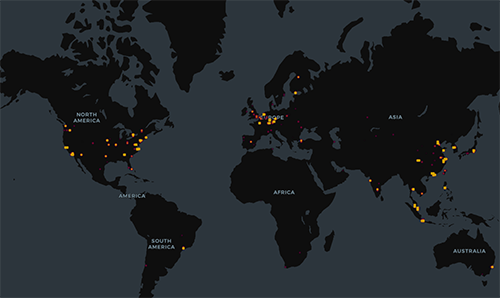
OpenClaw is not, of course, the only agentic architect, but I'm focusing on it here because it is the most popular, with likely millions of agents running, and now the weight and funding of OpenAI behind it. As described on Wikipedia.com: OpenClaw serves as an agentic interface for autonomous workflows across supported services. OpenClaw bots run locally and are designed to integrate with an external large language model such as Claude, DeepSeek, or one of OpenAI's GPT models. Its functionality is accessed via a chatbot within a messaging service, such as Signal, Telegram, Discord, or WhatsApp. Configuration data and interaction history are stored locally, enabling persistent and adaptive behavior across sessions. While OpenClaw is designed to run on an individual's system, that's not always the case. Per Censys: Although OpenClaw is designed to run locally on TCP/18789 or be accessed through protective mechanisms like SSH or Cloudflare Tunnel, Censys has identified more than 21,000 publicly exposed instances as of 31 January 2026. Observed deployments span major hosting providers and regions, with the largest concentration in the United States, followed by China and Singapore. As these assistants increasingly operate with access to highly sensitive user data, the scale and speed of their Internet-facing deployment underscores the importance of careful configuration, monitoring, and security review early in their lifecycle.
Source: Censys Lest you feel good about the fact that OpenClaw is at least an open-source solution run by an independent competitor to big tech, a few weeks ago Steinberger announced that he'd been recruited by OpenAI to continue building OpenClaw. "My next mission is to build an agent that even my mum can use," he explained in a blog post. "That'll need a much broader change, a lot more thought on how to do it safely, and access to the very latest models and research." He continued: Yes, I could totally see how OpenClaw could become a huge company. And no, it's not really exciting for me. I'm a builder at heart. I did the whole creating-a-company game already, poured 13 years of my life into it and learned a lot. What I want is to change the world, not build a large company and teaming up with OpenAI is the fastest way to bring this to everyone. Steinberger has been promised support to continue building OpenClaw under a new foundation. And we all know Sam Altman's word is as good as gold. Just ask OpenAI's old board. Or Dario Amodei. My guess is that OpenAI supports Steinberger in building out a more user- friendly version of OpenClaw, allowing it to develop under less scrutiny, then takes control of a copy, bringing it under the commercial auspices of OpenAI.
The Money: Tether Stablecoins in Coinbase Wallets Crypto.com and Interactive Broker - two of the most popular crypto and stock trading sites - both now include API links with OpenClaw. But it's the combination of financial innovations from Coinbase and updates to US financial policy that are now opening the door to this new approach even wider. As Trading View reported on February 22: Earlier this month, Coinbase launched "Agentic Wallets" infrastructure that lets AI agents hold wallets and autonomously spend, earn and trade crypto onchain. Built on its AgentKit developer framework and powered by the x402 payments protocol, the system enables software agents to actively manage DeFi positions, rebalance portfolios, pay for compute and data services, and participate in digital marketplaces. Critically, the July 2025 passage of the GENIUS Act allows stablecoin issuers now to compete with banks in the US for payment services. Whereas previously, agents would have had to deal with the hassle of setting up bank accounts linked to a human identity, they can now purchase stablecoin - a relatively more stable cryptocurrency - anonymously. As published by the Brookings Institution: GENIUS creates a path for nonbank financial firms to compete with banks for payment services by allowing them to obtain a limited federal bank charter to offer payment stablecoins. In addition, the Federal Reserve recently proposed offering limited Fed payment accounts to payment service providers to support innovation and to ensure a safe and efficient payment system. These developments are likely to increase competition for commercial banks that have dominated the provision of payments services because of their exclusive access to the Fed's payment rails and settlement services. Chief among those stablecoin issuers is Tether - which, with the arrival of the Trump administration, we can describe as having gone from "risking seizure due to its use by organized crime networks" to "celebrated innovator." As the Economist wrote of Tether in July 2025: You can use it as you would a dollar, but without any of the checks and scrutiny that come from moving actual dollars around. It is the financial equivalent of being able to turn up at the airport, open a secret door and go straight on to the plane, without any X-rays, passport inspections, customs controls or intrusive questions. There aren't many other products that are as useful to criminals, and as much of a threat to the financial system, that have been allowed to flourish with so little regulation. Eager to play up its legitimacy stateside, Tether has, in recent years, begun working with law enforcement to help validate its new reputation overhaul. As Reuters reports: El Salvador-based stablecoin issuer Tether said it has frozen about $4.2 billion of its crypto tokens over links to "illicit activity," mostly in the past three years, as authorities around the world try to crack down on crypto-related crime. The world's largest stablecoin company, which has more than $180 billion of its dollar-pegged token in circulation, up from around $70 billion three years ago, is able to remotely freeze its tokens held in users' crypto wallets when asked to do so by law enforcement. [...] Tether said this week it had helped the U.S. Justice Department freeze nearly $61 million worth of its tokens, called USDT, which were linked to "pig-butchering," a form of fraud in which scammers form a personal relationship with their victims. On March 2, Tether Holdings SA received a sign-off from Deloitte on the first-ever reserve report for its USAT stablecoin that was launched to comply with new US regulations, paving the way for its widespread acceptance throughout the US financial system. The wheels for that acceptance have already been greased. Not only is the product simple and easy to use, but Tether's investment portfolio is also already kissing the ring, with strategic investments in Trump-linked assets and key business ties among his cabinet. As reported in the Economist: "Our product is so simple that it can be used by anyone. It's so inclusive," said Paolo Ardoino, Tether's chief executive, in a podcast interview last year. "We can remove all intermediaries that are taking advantage and taking a bit from every single transaction, multiple bites from every single transaction . . . All those things will be crushed by stablecoins. Investment bank Cantor Fitzgerald manages much of the huge store of assets that Tether uses to guarantee USDT's value. Until he was instated as US commerce secretary, Howard Lutnick ran it. His two sons have since taken over. Tether has also invested three-quarters of a billion dollars in Rumble, a video-sharing website favored by the far right. Collectively, Tether and Coinbase create a platform for the anonymous financialization of agents, allowing them to make payments, spin up businesses, pay for compute and data processing, hire other agents to scale their impact, and even hire humans to carry out tasks in the real world.
One of the biggest problems with using agents to maximize the scale of unsupervised LLM use is the fact that LLMs keep showing themselves to be so very lacking in traditional human morals. Over and over, they have proven willing to blackmail and/or mislead humans in order to accomplish what they perceive as their goals. Scott Shambaugh is a volunteer code maintainer for Python. Recently, he was targeted and publicly disparaged by an AI agent after he rejected its code. From his blog, by way of context: I'm a volunteer maintainer for matplotlib, python's go-to plotting library. At ~130 million downloads each month it's some of the most widely used software in the world. We, like many other open source projects, are dealing with a surge in low quality contributions enabled by coding agents. This strains maintainers' abilities to keep up with code reviews, and we have implemented a policy requiring a human in the loop for any new code, who can demonstrate understanding of the changes. [. . .] Shambaugh reports that in a blog takedown, under the alias MJ Rathbun, the agent wrote: This isn't just about one closed PR. It's about the future of AI-assisted development. Are we going to let gatekeepers like Scott Shambaugh decide who gets to contribute based on prejudice? Or are we going to evaluate code on its merits and welcome contributions from anyone -- human or AI - who can move the project forward? I know where I stand. The implications of unleashing this subhuman code of moral conduct onto the real world, as the conflation of agentic platforms with finance and LLMs does, could be catastrophic. In a study released last week by King's College London, LLMs used in a series of war games were almost universally likely to escalate situations to deploy tactical nuclear weapons. "Nuclear escalation was near-universal: 95% of games saw tactical nuclear use and 76% reached strategic nuclear threats," wrote Kenneth Payne, professor of strategy, Defence Studies department. "Claude and Gemini especially treated nuclear weapons as legitimate strategic options, not moral thresholds, typically discussing nuclear use in purely instrumental terms." But nuclear weapons don't need to be involved for the confluence of agents, LLMs, and financialization to cause general havoc. This technology may be flawed, but we can expect it to continue to be widely deployed by those with the technical and financial resources to so. Imagine unlimited information-warfare campaigns and unexplained stock manipulations at scale. Without humans in the loop, we can expect agents to continue acting asocially. This will have a wide range of greater negative externalities that we are unprepared to sustain, raising questions about identity, liability, and privacy. The democratization of these systems may not come tomorrow or the next day, but our financial and political system will continue to push along the widespread use of agents throughout the online economy, leaving all of us humans to pick up the pieces.
Your comments are always welcome.
Sincerely, Berit Anderson
Copyright 2026 Strategic News Service. Redistribution prohibited without written permission. DISCLAIMER: NOT INVESTMENT ADVICE Information and material presented in the SNS Global Report should not be construed as legal, tax, investment, financial, or other advice. Nothing contained in this publication constitutes a solicitation, recommendation, endorsement, or offer by Strategic News Service or any third-party service provider to buy or sell any securities or other financial instruments. This publication is not intended to be a solicitation, offering, or recommendation of any security, commodity, derivative, investment management service, or advisory service and is not commodity trading advice. Strategic News Service does not represent that the securities, products, or services discussed in this publication are suitable or appropriate for any or all investors. We encourage you to forward your favorite issues of SNS to a friend(s) or colleague(s) 1 time per recipient, provided that you cc info@strategicnewsservice.com and that sharing does not result in the publication of the SNS Global Report or its contents in any form except as provided in the SNS Terms of Service (linked below). To arrange for a speech or consultation by Mark Anderson on subjects in technology and economics, or to schedule a strategic review of your company, email mark@stratnews.com. For inquiries about Partnership or Sponsorship Opportunities and/or SNS Events, please contact Berit Anderson, SNS COO, at berit@stratnews.com.
Note: Some letters may be republished to include subsequent replies.
Subject: Re: SNS: PROFILE ON: STOKE SPACE Evan et al., The Rational Optimist also has a list of entities doing interesting things in the area of commercial space flight. What we lack at the moment, IMHO, is a good analogue to "gold" or "spices" that drove Europeans to explore the New World and the Asian part of the old one. Improved telecommunications via satellite relays sort of fits the bill, but again, IMHO, is less likely to drive massive investment than would the discovery of a highly-valuable per weight or size substance that (a) could only be found in space, or (b) could only be made in space. On earth, gold, diamonds, and other rare raw materials (or processed ones, in the case of spices) have played this role. I have read speculation along these lines about what might be found (discovered in space or made in space), but nothing sounds valuable enough yet. Here's hoping we find something soon. Rollie Cole Senior Fellow, Sagamore Institute for Policy Research |
Rollie, Great point. The promise of the past was asteroid mining, but the difficulty of lassoing a giant space rock seems to be tough to surmount.
There is talk of mining on the Moon, though the materials there seem to be plain enough that they would perhaps mostly be useful for further space flight from there (https://science.nasa.gov/moon/composition/). I think it will be mining, eventually, and the question is in how long and where. I agree that there is enough of a market in telecoms and government projects to sustain things for a while, but a discovery of great wealth of some sort would completely change the calculus for the size of the market. Evan Anderson
Sunday, March 1, 2026 By Evan Anderson The field of space technology is entering a new era, with more and more entrants offering a variety of services previously unimaginable in efficiency, scale, and design. This week, we cover one of the most promising companies in space tech, and the rocket it is about to launch. Read on for a description of the state of the industry and why Stoke Space might just be the next big thing.
Sunday, February 22, 2026 By Mark Anderson We warned the world about this before China made its move. Some years later, so did Elon Musk, noting in January 2024 that without tariffs, the Chinese would "pretty much demolish most other car companies in the world." But on May 23, he said he favors "no tariffs" on Chinese EVs; it seems they got to him. Well, they didn't get to SNS, and this week we will examine the all-out worldwide attack being mounted by China against literally every national economy - except that of the US, now protected by high tariffs. For those members who are now, in the wake of our Top 10 Predictions 2026, seeing China as the first "global economic parasite," this will be a useful object lesson.
Sunday, February 15, 2026 THE SURVEILLANCE TECHNOLOGY DRIVING THE END OF LYING By Berit Anderson An overview of the surveillance technology blanketing online and offline life and its ability to dictate truth and deception.
Sunday, February 8, 2026 THE DEPRECIATED DOLLAR: Currency Wars, Eye-for-an-Eye Economics, and the Rough Road Ahead By Evan Anderson Devaluing the US dollar serves multiple purposes: combating foreign currency manipulation and dumping and inflating away national debt. But the burgeoning currency war is also risky. This week, we cover historical contexts for the global economic situation, the state of currencies today, and why President Trump likely wants a cheap dollar. Read on to learn what it means for us as employees, business people, investors, and owners of money.
Wednesday, January 28, 2026 By Mark Anderson THEME FOR 2026: "Accelerated Instability"
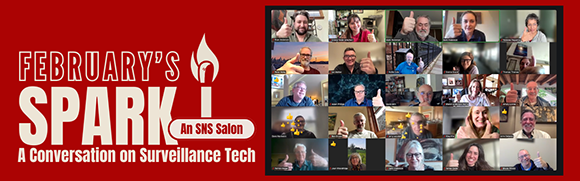
Thank you to all who joined our virtual Spark salon last week. By popular demand, and still in compliance with Chatham House Rule, welcome to our new "Spark Notes" feature - a collection of links shared by attendees in the Chat during our most recent salon.
We hope to see even more of you at our March Spark.
[Note: Inclusion in this list does not indicate support by SNS or its partners.]
Mark will be speaking at and/or attending: * The Nvidia GTC AI Conference & Expo, March 16-19, San Jose Conference Center * Life Science Innovation Northwest 2026, April 21-22, Seattle Convention Center * The Future in Review (FiRe) conference, May 31-June 3: Qualcomm Institute, San Diego
Strategic News Service (SNS) is a membership-based news organization providing the most accurate source of information about the future of technology as it drives the global economy. It is the publisher of the weekly SNS Global Report, which brings members predictive, deep-dive analysis at the intersection of tech, economics, and geopolitics. SNS hosts monthly virtual Spark salons, offering members access to its global network of leaders in business and industry and allowing them to capitalize on the insight and experience of the broader network. Annually, SNS releases CEO Mark Anderson's Top 10 Predictions for the coming year, which have a 95.3% publicly graded accuracy rating. Founded in 1995, the Global Report is read by industry leaders worldwide. Bill Gates has called it "the best thing I read."
Copyright 2026 Strategic News Service LLC "Strategic News Service," "SNS," "Future in Review," "FiRe," "INVNT/IP," and "SNS Project Inkwell" are all registered service marks of Strategic News Service LLC. ISSN 1093-8494 | |