 |
HOW TO BUILD AN ATOM By Mark Anderson _____ Why Read: The science of building atoms, as opposed to smashing them, is in its infancy, partly due to a lack of understanding of the nature of (not) empty space. This week's discussion, focused on understanding the basic nature of persistent matter, is taken from the point of view not of smashing atoms, but of building them from space itself. _____ Author's Note: Earlier SNS reports on Resonance Theory include, but are not limited to:
Since the end of World War II, the world has been obsessed with smashing atoms, whether for weapons, scientific discovery, or power generation. I happen to think that making atoms is more interesting - and it should be more productive. SNS members who have been following our Resonance Theory papers will know that the beginning of this work established that space is not empty (1979), and "physical laws derive directly from the physical characteristics of otherwise-empty space." When I wrote that first paper, this was a scandalous concept, and definitely not something the Physical Review D, for example, was ready to publish. Today, it is pretty much recognized as part of the physics "bible." And now, as then, we are going to begin with simple things and build up from there. For instance: How do we create a piece of light, which is perhaps the simplest and most elegant representation of energy in space? Well, it's easy: you just take an electron, bring it together with a positron (same mass, opposite charge), and (stand back!) you get "annihilation" - i.e., light. Richard Feynman, who won the Nobel prize for his work in this field (called quantum electrodynamics), was perhaps most famous for creating a wonderful new graphics language for physics. It saved weeks of computing time - and, painted on the side of his Volkswagen bus, got lots of attention. Here is a Feynman diagram of the above:
This shows an electron (e-minus) and a positron (e-plus) colliding and producing light (squiggly line). (In the first Resonance paper, we proposed that + and - electrical charges could be interpreted as mirror geometries that, when united, produce the wave geometry of electromagnetic radiation.) And now, for our second question: How do we make an electron? Well, on the right side of the above diagram, we have at least one answer: light spontaneously splits back into an electron and a positron! This basic set of interactions is one of the cornerstones upon which I built Resonance Theory. There are other ways to make light and electrons, but this is the most elegant way to "build" them.
The Nature of Physical Space, Uniting General Relativity and Quantum Mechanics Those who have read my book The Pattern Future will recall that, as a result of the idiotically arcane peer-review experience during that period - when the paper was rejected because it proposed strings made of empty space instead of fields - I decided to use a system I later called "Go to the Masters." Today, a majority of physicists align with one form or another of String Theory. The Idea was, you skip the quicksand of committees and find the smartest people in the world on the subject at hand, then ask them for their views. To figure out if I was on the right track regarding making persistent matter from "empty" space, I started with a visit to David Bohm - a longtime friend of Einstein's and a brilliant physicist in his own right. Interestingly, like Einstein, he had an "intellectual partner" over a long period of time, named B.J. Hiley.* David had been working for decades on the Einsteinian problem of unifying general relativity with quantum mechanics. I thought he had the wrong idea (overlaying quantum grids on spacetime), but I also thought no one in the world would better understand Resonance and its own ability to unite these two theoretical worlds. When I went to visit him in London one late afternoon, the room was dark, and B.J. was seated quietly by his side. (He did not speak at all during my visit.) Bohm's wife was in the hospital, I discovered; Bohm had left the hospital to make this appointment. I laid out my programme, as they say in Britain, pointing out the advantages of space having known physical characteristics (no one wanted to say the word "ether," nor did I) and suggesting that perhaps this solved his (and my) problems. After I finished, the room was deadly quiet. I thought I must have really screwed up, probably come across as the most naive jerk Bohm had met in decades. No one said a word. It was likely just a minute or two later, but it felt like years, when Bohm said: "Mr. Anderson, this is very interesting. Can you return here in the morning?"
The Particle Zoo and Atoms in General The only reason I declined was because I had an appointment that morning in Oxford with Roger Penrose, arguably the most advanced mathematician in the world. I was interested in Roger because he had created two mathematical entities, spinors and twistors, and I thought these might somehow be the primordial models for how space resonated, creating stable particles like electrons and protons. I also felt that these entities united the wave and particle dual natures of persistent particles. Penrose immediately put me to a test - I think to see if I was just another bothersome wack job. "What is your opinion?" he asked. "Do neutrinos have rest mass or not?" This was a big debate at the time. "Yes, they do," I said. A decade or two later, this turned out to be true, and it bought me some of his time that day. I then explained Resonance Theory, adding that I thought his mathematical models could, in fact, be the primordial functional descriptions of the aspects of space resonating behind the idea of persistent particles. "What do you think?" I asked. He gave me kind of a funny look and said: "Absolutely."
At this stage, I was looking at how to build light from waves in space, the mechanics of how they interconverted between light and matter, and whether these ideas could lead to a kind of Lego project where we could build actual atoms from the vibrating strings. Given this perspective, the question then became how they might best fit together. It isn't really hard to imagine this as a normal behavior in space: just like anything else, space has resonant properties - defined at that time by its capacity to carry electric and magnetic forces (and "fields," a cute name for something not yet well understood). You inject some energy into space, maybe as light, and then it responds by vibrating, in accordance with its own resonant capacities. Persistent particles fit this resonant requirement; short-lived particles did not. There was one person I knew of who seemed would be the best in the world to ask whether this whole "Lego-like" project, conducted with three fields and multiple building blocks, could work. Nobelist James Cronin, who at that time was a professor emeritus at the University of Chicago. He agreed to see me late on a Saturday morning. The building was old and empty of students. I remember the quiet, and the dusty light coming in through dirty windows. His office was at the end of a hallway, and I found it easily. He was very polite, and businesslike, and we got right down to it. Among other things, there are some strange oddities in atomic structure, related to an amazing number called the fine-structure constant and including one funny behavior called the Lamb shift in energy levels. (For the physicists in the crowd, this pretty-good description from Wikipedia should refresh your memories.) In physics the Lamb shift, named after Willis Lamb, refers to an anomalous difference in energy between two electron orbitals in a hydrogen atom. The difference was not predicted by theory and it cannot be derived from the Dirac equation, which predicts identical energies. Hence the Lamb shift refers to a deviation from theory seen in the differing energies contained by the 2S1/2 and 2P1/2 orbitals of the hydrogen atom.) The Lamb shift is caused by interactions between the virtual photons created through vacuum energy fluctuations and the electron as it moves around the hydrogen nucleus in each of these two orbitals. The Lamb shift has since played a significant role through vacuum energy fluctuations in theoretical prediction of Hawking radiation from black holes. Cronin was one of the world experts in all this, and I thought the likelihood of the modular construction programme of Resonance could easily fall on its sword right there, unable to duplicate these weird behaviors. I described the basic ideas, where they had come from, why I thought they were likely correct. I tried to share the vision of space not being empty and of these persistent resonances being combined, like building blocks, into the larger structures called atoms. He listened carefully, not saying a thing, which was better than outright derision or laughter, in my estimation. I took the leap: "Does this make sense to you? Do you think one could build an atom this way?" "It makes sense," he said. "Would it violate the Lamb shift?" "No, I don't think so." Again, everything got very quiet. And then, finally: "Mr. Anderson, could you show me the mathematics for this?" My internal answer was not only "No," but, to be honest, "Hell no." Other than spinors and twistors, I didn't have the faintest idea. I very quickly thanked him, dismissed myself, and nearly ran away down that long, dusty hall. In excitement.
Science seems to take forever to change. Today, we're still smashing atoms in, well, "atom smashers," of ever greater size, complexity, and expense. When all you have is a hammer, everything looks like a nail. We have made some steps forward: the first net-positive energy fusion at the National Ignition Facility at Lawrence Livermore National Laboratory comes to mind. But it takes about a large town's worth of energy to do it, and it's very transient (unstable). A number of companies and groups, in the US and Japan, have been working on low-energy nuclear reactions (LENR), which seem to be leading to fusion without the need for massive energy inputs. (Come to FiRe 2023 to hear Dennis Bushnell, newly retired chief scientist at NASA Langley, talk about a unique version and understanding of the state of the art on this, in his opening night speech.) This is exciting. The basic idea, and the reason for writing on this topic today, is that I suspect science has missed the boat entirely on the question of what is at the core of atomic structure, and therefore how to build it. It's time to stop thinking of particles and start thinking of the space of which they are made, and how we interact with them, and how space interacts with itself. If these building blocks, these persistent resonances of space vibrating, are really well-suited to fitting together, isn't there another way of reproducing that, rather than smashing? Perhaps something more like an elegant, catalyzed fitting process - something more akin to protein chemistry and less like supercollider particle warfare. If we understand, in terms of space and the waving strings made of space, how and why they fit in the simplest of atoms, perhaps we will then understand how to build these atoms - not with smashers, but with geometrically appropriate catalysts and environments. Perhaps these complementary fittings of resonances have physical characteristics represented by spinor or twistor mathematical models, made of space itself when invested with energy, and can be assembled just like the beautiful, complementary, cosmic puzzle pieces they no doubt have always been.
Your comments are always welcome.
Sincerely, Mark Anderson
*The SNS Einstein Project proposes that the best way to work in developing new scientific discoveries, a la Einstein himself, is through the long-term pairing of compatible individuals fascinated by the same questions, eager and willing to meet nightly, for years, in an ongoing search for answers. If it worked for Albert Einstein and David Bohm, why wouldn't it work for Bob and Joe, Nancy and Sarah? This could open an entirely new understanding of education as passive note taker and science progress through paired challenge and discussion. Email sent to SNS may be reprinted, unless you indicate that it is not to be. We encourage you to forward your favorite issues of SNS to a friend(s) or colleague(s) 1 time per recipient, provided that you cc info@strategicnewsservice.com and that sharing does not result in the publication of the SNS Global Report or its contents in any form except as provided in the SNS Terms of Service (linked below). To arrange for a speech or consultation by Mark Anderson on subjects in technology and economics, or to schedule a strategic review of your company, email mark@stratnews.com. For inquiries about Partnership or Sponsorship Opportunities and/or SNS Events, please contact Berit Anderson, SNS COO, at berit@stratnews.com.
"The ultimate goal of MyRTO is to provide greater clarity and context to both employees and leaders regarding their RTO expectations and in-office schedules, and help foster more transparent communications." - TikTok spokeswoman Jodi Seth, on requiring all TikTok employees to use a new surveillance app on office attendance, backed by the threat of "punishment"; quoted in the New York Times Welcome to China's surveillance state, TikTok Toads. What were you expecting?
"The profile settings of child user accounts were set to public by default, meaning anyone (on or off TikTok) could view the content posted by the child user." - EU regulators, in levying a $370M fine against the Chinese-owned firm; ibid. Please, just turn it off, and kick these guys out, just as they have done to Western social-media companies for years. Enough, already.
"The DNC has refused to host debates, though a vast majority of Democratic voters want and expect them so they can judge which candidate has the popular appeal and vigor to challenge the Republican nominee." - Democratic presidential candidate Robert Kennedy Jr.; quoted in the Wall Street Journal
"They put on their golden blindfolds and chase a yield that never comes." - Mike Gallagher (R., Wis.), on US companies still operating in China; ibid.
"There is, however, another possibility. We may be at a point where we need a radical departure from the standard model, one that may even require us to change how we think of the elemental components of the universe, possibly even the nature of space and time." - Adam Frank and Marcelo Gleiser in the op-ed "The Story of Our Universe May Be Starting to Unravel," discussing new results of the James Webb Space Telescope; in the New York Times
"The investment frenzy is well underway. In the first half of 2023, funding for generative AI startups reached $15.3B, nearly three times the total for last year, according to PitchBook." - Steve Lohr, in the New York Times
"I want to be clear, that we are not compromising on matters of national security." - Commerce Secretary Gina Raimondo, on compromising the economic security of the US while in China; quoted in the Wall Street Journal Perhaps someone should tell Gina, and Biden, that we are in an economic war with China - by China's choice. Gina, economic matters are matters of national security.
"Senator Schumer, the majority leader, said the sessions were intended to educate members of Congress on the risks posed by AI on jobs, the spread of disinformation, and intellectual property theft ." - Cecilia Kang, on private meetings with tech leaders Elon Musk, Satya Nadella, Sundar Pichai, and Sam Altman; quoted in the New York Times Too many holes in the dike, not enough fingers.
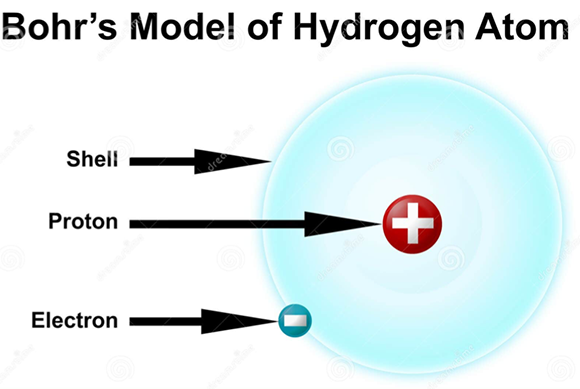
Images of the Waves That Comprise Atoms Images of a Hydrogen Atom: The Bohr planetary model of the early 20th century:
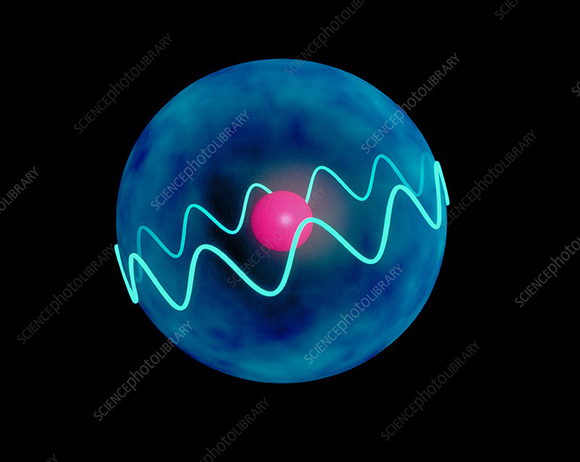
Source: dreamstime.com Artist's rendition of the transition toward showing the wavelike nature of the electron:
Source: Science photo library
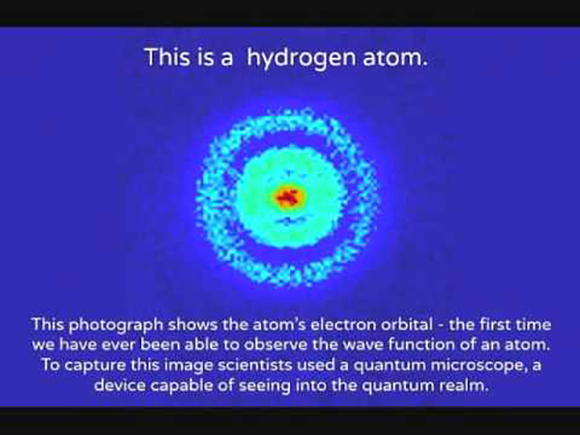
The first real photograph of a hydrogen atom:
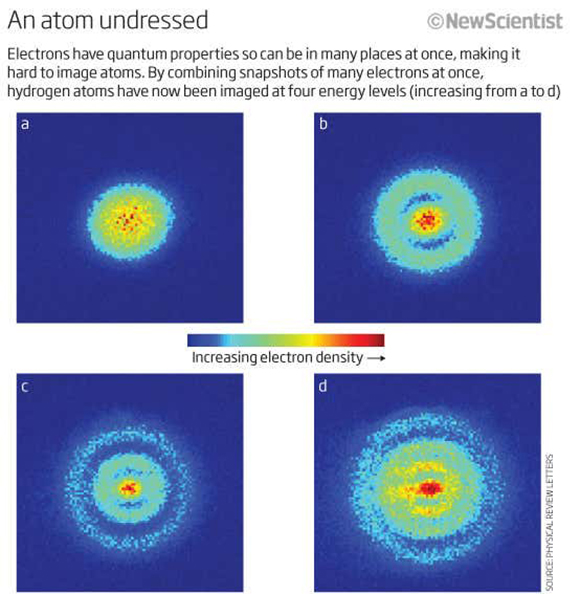
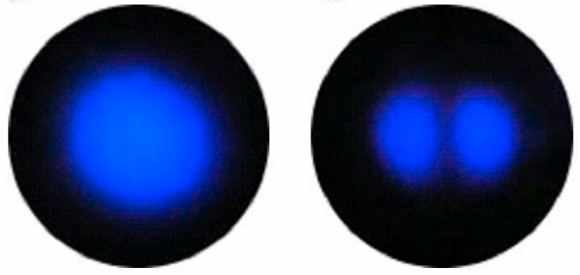
And, from Nature, text and photographs of a hydrogen atom from rest raised to higher states of excitement by laser: Orbitals lie outside the nucleus and their properties are described by mathematical wavefunctions. These functions are difficult to study because measuring observable components can destroy other quantum features. Aneta Stodolna at the FOM Institute for Atomic and Molecular Physics in Amsterdam, Marc Vrakking at the Max Born Institute in Berlin and their colleagues designed a quantum microscope to study hydrogen orbitals directly. Their system used tunable lasers to excite electrons in a hydrogen atom placed in an electric field. An electrostatic lens then stretched and magnified the orbitals - without disturbing the internal structure - until individual electrons hit a detector. After recording about 50,000 electrons, the team produced images to show the structure of the electron orbital (pictured) of atoms at different excited states.
Sources: Nature (top text) and New Scientist (included text and photos)
On the proton, on the quarks inside, and the (Schrodinger, or interaction, probability) waves that make them all: Take that hydrogen atom. At its center is a proton. Now at the resolution of this imaging technique, the proton is pretty much a point. But suppose you increase your resolution somehow. Eventually, you get to see that the proton has structure. Just as atoms consist of protons and neutrons, protons and neutrons consist of quarks. The "interior" of a proton would look complicated, but not unlike the picture above, it would show various amplitudes corresponding to the likelihood of quarks occurring at various spots therein. In essence, we would be looking at the quantum mechanical wavefunction of the particles in question. But now let's move on to the "smallest" particles, that is, those that are believed to be fundamental building blocks. Being fundamental means no substructure, no matter how high the energy is at which these particles are probed. That would mean that the particle is truly point-like, with no meaningful radius or volume. But even this case is not as clear-cut as we'd like. Because if we probe at high enough energies, the combined energy of whatever we use to probe the particle and the particle itself may be enough to create a shower of new particles. So instead of a nice, clear-cut picture of a point, we get a messy shower of, well, all sorts of things. This, in fact, is what particle accelerators do: They smash fundamental particles together to create showers of new particles that can then be studied. Last but not least what is a particle anyway? In the best theory that we have, quantum field theory, a particle is neither an object nor a fundamental concept in the theory. The fundamental concept is the field; particles are its excitations. Worse yet, allow accelerating observers or allow gravity, and two observers may not even agree on the particle content that they see. So how do you visualize something that exists for one observer but does not exist for another? - Viktor Toth and Frederic Tachford, on Quora.com
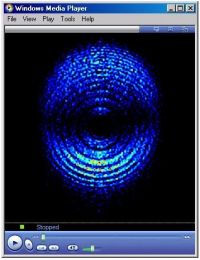
- and the first photograph / video of a single electron:
https://www.youtube.com/watch?v=ofp-OHIq6Wo
Source: ck12.org And: Electron density around one carbon nucleus, showing the s and p energy levels: I posted images of real pentacene molecules the other day, but now the single molecule/single-atom imaging field has reached another milestone. There's a paper coming out in Physical Review B from a team in Kharkov using a field emission electron microscope. At heart, that's a pretty old type of machine, first invented back in the 1930s, and it's long provided images of the arrangements of atoms in metal surfaces. (More precisely, you're getting an image of the work function, the energy needed to remove electrons from the material). But this latest work is something else entirely. The researchers have improved the resolution and sensitivity, narrowing things down to single-atom tips. So instead of a tungsten surface, we have a single carbon atom at the end of a chain. And instead of the behavior of the electons [sic] in a bulk metal, we have the electron density around one nucleus. Behold the s and p orbitals. Generations of students have learned these as abstractions, diagrams on a page. I never thought I'd see them, and I never thought I'd see the day when when it was even possible. As always, I react to these things with interest, excitement, and a tiny bit of terror at seeing something that I assumed would always be hidden.
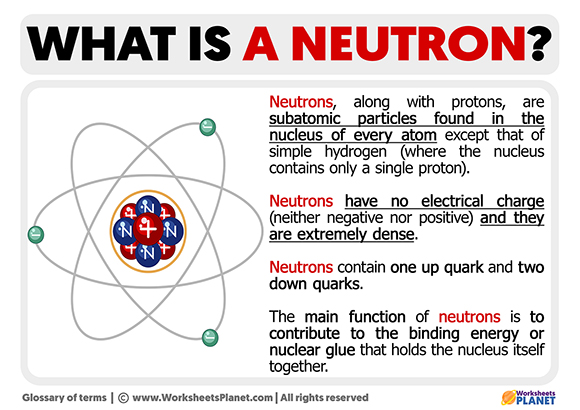
- Derek Lowe, science.org And down to the neutral neutron, which allows all those protons to hang around together in the nucleus, despite having repulsive same-plus electrical charges:
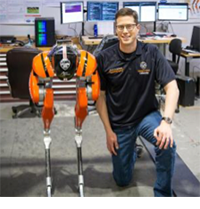
Jonathan Hurst | Co-Founder and Chief Robot Officer, Agility Member #: 16740
Jonathan Hurst leads the strategic vision for Agility Robotics' robot, working with exceptional leaders at the company to build the industrial design and brand and the technical roadmap, conduct R&D, and protect the firm's intellectual property. He works closely with his co-founder and CEO to engage with investors and with the engineering team to help build the best product possible. AR's product, Digit, is a human-centric, multi-purpose robot designed to operate where people do, use infrastructure designed around people, do human workflows, and interact with people. It is the first such commercially available robot, looking somewhat humanoid in form, made for real-world logistics work. AR's vision is to enable humans to be more human. Digit is a robot partner to augment the human workforce. [Ed. Note: See "Fresh news!" below.] Previously, Jonathan was a professor of robotics at Oregon State University. He started the first robotics lab at OSU - the Dynamic Robotics Lab - and after a few years of hiring trusted colleagues in robotics, he co-founded the robotics program. It became only the third institution in the US to offer PhDs and master's degrees in Robotics and has since grown to over 100 students and acquired its own building and quite a few faculty (12-30, depending on how you count). Jonathan holds an MS and a PhD in robotics from Carnegie Mellon University. In earlier days, he interned at MIT's Leg Lab, in what turned out to be the lab's last year. The building is long gone, but he is proud to still have the lab key. SNS Connection: We look forward to mingling with Jonathan at FiRe 2023, where he'll be talking about "Getting to Know the AI in Humanoid Robots" with host Andra Keay, Managing Director and Founder of Silicon Valley Robotics, on Wednesday morning, 11/8. Wouldn't you love to see a demo?
SNS: IT'S ALL ABOUT ENERGY ENERGY STORAGE: THE KEY TO GLOBAL SOLAR THE COST (AND BENEFITS) OF GPT THE NEW COPPER AGE: ELECTRICITY OF DEMAND Subj.: Energy Storage: The Key to Global Solar Berit, Yes To the extent that Energy, AND ANYTHING ELSE WRT CLIMATE, AND mostly anything else besides is all about cost/ profit and capabilities. Fission, Fusion, Hydrogen is not going much of anywhere simply DUE TO COST! D.
Dennis Bushnell Chief Scientist (ret.) - And, later: Subj.: AI Scores in the Top Percentile in Creative Thinking Mark, https://theconversation.com/ai-scores-in-the-top-percentile-of-creative-thinking-211598 YUP!!! As have long said, we now create wealth by inventing things [vs.] exploiting natural resources. This is just the performance of the CURRENT AI. Creativity was long considered the greatest differentiator between humans and machines. SO MUCH FOR THAT. This will greatly accelerate the shift of "jobs" to the machines, but also create massive wealth which we can tax to provide a comfortable guaranteed annual income. We are now swiftly entering the virtual age, tele-everything, 5 senses VR, holography, THE METAVERSE, merging mentally with the machines. From this and MUCH ELSE, Society changing Rapidly.Unfortunately, from Marshall McLuhan, "we march forth into tomorrowland with our feet planted firmly in Bonanzaland"... are terminally tactical, why climate and much more has gotten way ahead of us, why NASA needs a NASA 2.0.. Best D. Dennis Bushnell
Mark, Brilliant (and important) analysis. As an "ancient AI guy" I get asked about AI by a lot of non-technical friends. Some have played around with ChatGPT, and are in awe. "It's scarily smart!" "It really seems human!" "I understand it passed the Turing test!" My reply: have you ever met a person who seemed smart, but after further discussion turned out to be rather shallow and, well, dumb? One way to find out is to ask "Why?" Why do you believe that? Why did you reach that conclusion? (Duh, I heard it on the Internet or Fox doesn't cut it.) Smart humans possess "explainability" ChatGPT and other black-box neural net AI systems don't. They may play great chess and mimic natural language, but I wouldn't trust them with critical tasks unless, as we learned long ago in school, they can explain their work! Rick LeFaivre Board of Directors
Mark, At a time when the political right has decided that it's no longer convenient to believe in facts, it's more important than ever that computers, and software, be reliable. So, apparently the political left doesn't have the same problem? Is it really necessary to expose your political bias in your articles? Vic Horne
Hi Vic, Good point. It isn't so much a bias (I do agree with you), but it has become a kind of badge of courage on the far right; facts seem to be, for some deep reason that continues to elude me, the enemy. But I was not intending in any way to imply that the left does not also make up its own on demand. Thank you for writing in, Mark Anderson
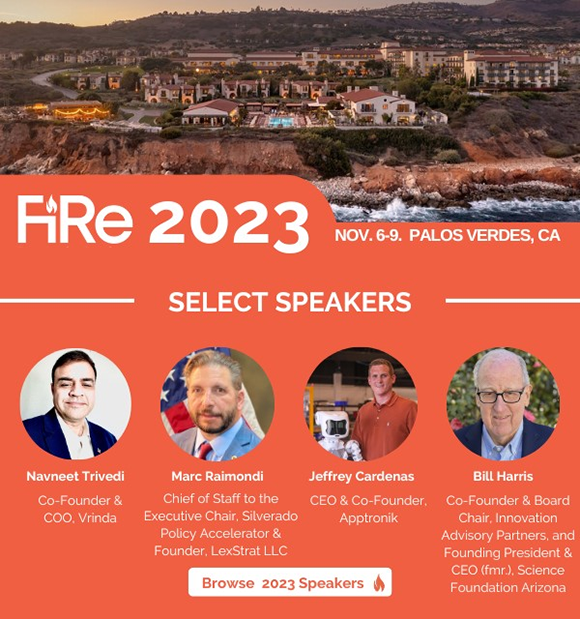
* On September 20, at 9:30am, Mark will be keynoting the Info-Tech LIVE 2023 Conference at the Cosmopolitan Hotel in Las Vegas, on the subject of "Making Major AI Discoveries Through Explainable AI." * On the evening of September 21, he and Pattern will be the guest hosts of a BCI Summit private dinner in NYC, on "Explainable AI and Its Benefits vs. Neural Networks." For details or to request an invitation, email Denyse@patterncomputer.com. * And November 6-9, he will be speaking on a variety of subjects, and hoping to see many of our members in person, at the FiRe 2023 conference, now in its 20th year, at the Terranea Resort.
In between times, he will be applying symbolic logic, symbolic regression statistics, and quantum theory, in figuring out exactly what went wrong with the hot-water pipe under the house. Or, call the plumber.
Copyright 2023 Strategic News Service LLC "Strategic News Service," "SNS," "Future in Review," "FiRe," "INVNT/IP," and "SNS Project Inkwell" are all registered service marks of Strategic News Service LLC. ISSN 1093-8494 | |