 |
"Next Year's News This Week" FOUNDATION PATTERNS By Mark Anderson For Scotty, who tells me we are just about done with "the great reset."
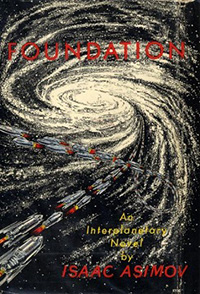
Why Read: Famed sci-fi author Isaac Asimov proposed that his character Hari Seldon, a mathematician excelling in psychohistory, could use social patterns to predict events thousands of years in the future. These days, getting it right a few weeks or months out is a daunting challenge for most. In this issue, we will look at where humanity is along the tracks of the major evolutionary cycles, forgoing emotion in favor of a pattern-based systems view. - mra ________ FOUNDATION:
The premise of the stories is that in the waning days of a future Galactic Empire, the mathematician Hari Seldon devises the theory of psychohistory, a new and effective mathematics of sociology. Using statistical laws of mass action, it can predict the future of large populations. Seldon foresees the imminent fall of the Empire, which encompasses the entire Milky Way, and a dark age lasting 30,000 years before a second empire arises. Although the momentum of the Empire's fall is too great to stop, Seldon devises a plan by which "the onrushing mass of events must be deflected just a little" to eventually limit this interregnum to just one thousand years. The novels describe some of the dramatic events of those years as they are shaped by the underlying political and social mechanics of Seldon's Plan. - Wikipedia.org
For our purposes in this issue of the Global Report, let's go for #4 - although all of the above apply. _____ Investors only bounce between fear and greed, and we are in the greed cycle. - SNS member Vinod Khosla, at this month's
When I was in the sixth grade, I had an excellent teacher, one who informed the class that over the time of its existence, the US had been at war every 19 years. But for someone in their 30s today, as the country celebrates its 250th anniversary, I am not sure there has ever been a time in their lives when the US was not at war. Is the history of human nature - and therefore its future - a circle? Or is it an ongoing evolution? A wave cycle, or a line bent here and there by patterns seen and unseen? Evolution: A Systems View If we were to take a deep look into what's driving change today, among the many answers would perhaps be universal agreement on at least four basic areas of action: Social, Technological, Economic, and Geopolitical. Our SNS view has long been that in the post-Information Age, technology drives every sector of the global economy. Using pattern recognition as our primary tool, this premise has worked quite well - perhaps better than any other, in terms of accuracy. While pattern recognition helps us predict the future, it also provides an interesting view of the past. The internet and omnipresent net devices have had effects in all these areas - tools obviously unavailable to the Founding Fathers as they devised the US Constitution: they had no mass media, no anger-enhancing social networks with billions of users and even more billions of bots - no jets, no nukes, no satellites. They had zero interest in democracy (favoring a republic) and clearly ignored almost any ideas of true equality, despite language to the contrary in the Declaration of Independence. On the other hand, it isn't clear that human nature has changed at all over time. In 1859, Charles Dickens told us, in the opening lines of A Tale of Two Cities: "It was the best of times, it was the worst of times." Reading the fuller quote (see "Quotes" below), one is tempted to find this an accurate description of today. By some accounts, the world sits at the brink of nuclear Armageddon and/or economic catastrophe, while a fairly large cohort of Valley Bros are hyping broken tech and preaching near-infinite abundance. Things have never been more equal, nor have they been as unequal. If we were looking for a fragility metric, we could try something like: people x guns x money = F, knowing there has perhaps never been more of all than now. Sorting this out between nations gives us the China rise vs. the US at its current peak; or, more widely, the CRINK (China, Russia, Iran & North Korea) alliance vs. the free world. Or, inside the free-world nations, never has there been greater polarization; while inside CRINK, never has there been more uniformity driven by surveillance and suppression - with all of this aided by technology. We'll turn CRINK into the CRU (China / Russia / US) triad and come back to it shortly. Interim Outcomes From a geopolitical, historical, and likely future perspective, it isn't hard to see the cycle of: Inequality -> Revolution -> War -> Peace -> Inequality ... But there are large-scale changes that may play a bigger role in this shared domestic / international cycle. Specifically: China: Global Economic Parasite We recently proposed that China represents a new, heretofore unrecognized, international financial role: This idea is both true and fascinating: China steals from literally all of its trading partners worldwide, doing economic damage across the planet. Originally, it stole intellectual property of all kinds by using employees; then, via cyber theft; and finally, as it climbed the IP quality ladder, from universities directly. (This is the reason that, in Trump's deal with Xi Jinping a year ago, Xi's only request was that the US increase Chinese student visas from 250k to 600k, a means of siphoning IP directly from the source.) Add to this its chosen national business model of InfoMercantilism (the perfect fit), uniquely driven by a dictator (vs. Japan or South Korea), and we see the focus necessary to be the productivity black hole that it is today. Russia's role in the world, as a complete foil, is the production and sale of resources - also driven by a focused dictator, but with China as its primary enabler / customer. Russia is therefore driven by Chinese growth. When we look at the global contest today and going forward, Iran and Israel seem to fall out as a pair: they share generational enmity, between countries and religions, with Iran focused with proxies on Israel's destruction and the latter focused on ethnic cleansing of Islamic peoples in Gaza and the West Bank. Let's pull this ill-matched pair and their proxies out of CRINK, NATO, etc., and deal with them separately, as a unit. The EU's role in this next-generation view is intentionally confusing. Comprising 27 countries, its role is thus one of fluidity, and lack of focus, across all time frames. On the other hand, if we look at Germany alone, we can see its continued decline in export-driven balance of trade, as China performs its usual surgery on the country's internals, from cars to robotics, machine tools to manufacturing. The CRU >>> The UCR Finally, we have the third pole in this CRU triad: the US. The US has several roles it is playing as we go forward, including:
And so, in the CRU, we have the productivity source, the parasite, and its captive resource provider. In order of economic importance, it would really be more appropriate therefore, to call this the UCR. If we look more closely at President Trump's behavior, we find something a bit different from the usual "transaction-based" limits: Trump is a businessperson, one who used to star in The Apprentice, a TV show focused on business models and performance. The point: he seeks deals in which he can dominate. In fact, it is likely that his well-known personal failing of narcissism is a required stepping stone to domination. Hence, perhaps, his preference for oil over wind power. He can't corner the wind. It's just business. Chokepoints There are various types of chokepoints that can interrupt or affect the evolution of these trends, from military to economic, around the world. Here are a few examples:
In reverse feeding order, we have Russia providing the resources, China the theft, and the US playing a somewhat chaotic defense, followed by the EU with its 27 different plans - led by the Germans, under Merz, hoping that turning to China will play to their export dreams. (Merz is completely misguided on this.) The Iran vs. Israel pair is actively and intensively acting as spoilers in many ways, not least of which are ongoing war at any cost, mass destruction and civilian killing, and a general wasting of others' resources, specifically including those of the US.
Finally, along the lines of our opening definitions of foundation, we should note the long-term effects of culture, of religion, of single ideas, in framing events far into the future. For example:
What will the result be in the next five years? Most likely, Russia in shambles, China humbled for lack of innovation abilities, the US weakened through parasitic drain and constant waste in unnecessary warfare, and the EU muddling through this minefield. And how about a few decades from now, or in the year 3000? In Asimov's series, Hari Seldon had the Foundations surviving the Galactic Empire after a 1,000-year struggle. Many other authors have been inspired by, and added to, this vision, including SNS members David Brin and the late Greg Bear. (See "Upgrades" for a full list.) Today, we can see the seeds for hope or destruction in the forces that unite or divide us. AI for good or ill, according to those in charge; the pervasive divisiveness and community powers of the internet and social networks, according to those in charge; income and wealth inequality, driven by the systems implemented by those in charge; and war and peace, the same. Will humanity survive its own innate behaviors? Are we better when judged by individual work rather than how we behave in tribes? Are homogeneous populations such as those in Asia more effective than blended populations such as those in Australia and the US? Is the national business model of wholesale theft more efficient than that of creative innovation? Does warlike expansionism win or lose in the contest of nations? Genghis Khan and Adolf Hitler might have different votes than Dwight D. Eisenhower and Winston Churchill; today, and for the moment, the worldview of the latter two has won out. The single pattern that seems to rule the day - and the day after that - is that the quality of the culture, religion, and social norms that we choose today will determine our outcomes tomorrow.
Your comments are always welcome.
Sincerely, Mark Anderson Copyright 2026 Strategic News Service. Redistribution prohibited without written permission. DISCLAIMER: NOT INVESTMENT ADVICE Information and material presented in the SNS Global Report should not be construed as legal, tax, investment, financial, or other advice. Nothing contained in this publication constitutes a solicitation, recommendation, endorsement, or offer by Strategic News Service or any third-party service provider to buy or sell any securities or other financial instruments. This publication is not intended to be a solicitation, offering, or recommendation of any security, commodity, derivative, investment management service, or advisory service and is not commodity trading advice. Strategic News Service does not represent that the securities, products, or services discussed in this publication are suitable or appropriate for any or all investors. We encourage you to forward your favorite issues of SNS to a friend(s) or colleague(s) 1 time per recipient, provided that you cc info@strategicnewsservice.com and that sharing does not result in the publication of the SNS Global Report or its contents in any form except as provided in the SNS Terms of Service (linked below). To arrange for a speech or consultation by Mark Anderson on subjects in technology and economics, or to schedule a strategic review of your company, email mark@stratnews.com. For inquiries about Partnership or Sponsorship Opportunities and/or SNS Events, please contact Berit Anderson, SNS COO, at berit@stratnews.com.
"It was the best of times, it was the worst of times, it was the age of wisdom, it was the age of foolishness, it was the epoch of belief, it was the epoch of incredulity, it was the season of Light, it was the season of Darkness, it was the spring of hope, it was the winter of despair...." - A Tale of Two Cities, Charles Dickens "This is an area that is glaringly missing because of our current attitude about China as an adversary. It is essential that our AI researchers and their AI researchers are actually talking. Victimizing them, turning them into an enemy, likely isn't the best answer. They are an adversary. We want the United States to win. But I think having a dialogue and having research dialogue is probably the safest thing to do. It is essential that we try to both agree on what not to use the AI for." - Nvidia CEO Jensen Huang, on China's chipmaking and data-center capacity, via TechRadar Pro "Our results suggest today's off-the-shelf LLMs should not be trusted for patient-facing diagnostic reasoning without structured comprehensive human review, and has significant limitations when used by patients for self-diagnosis. They can project confidence without showing robust reasoning, especially around differential diagnosis." - New science paper co-author Massachusetts General Hospital radiologist Dr. Marc Succi, adding that such confidence can further inflame the worries of patients with stress and anxiety issues; quoted in the Register "'Marketing LLMs as diagnostic agents risks fostering false confidence precisely where they are least reliable. Persistent failures in generating differential diagnoses and navigating uncertainty show that LLMs cannot yet be trusted in frontline decision-making. Real clinical reasoning starts earlier, when ambiguity is highest, and that is exactly where they remain weakest. Even if you get to the final answer eventually, the wrong differential can result in delays in care, unnecessary procedures with complications, high costs, and much more,' the [research] team explained [...] Succi also said that higher success rates in final diagnosis shouldn't be reassuring, warning that such data can create a misleading sense of safety and model competence." - Ibid. As I said in "SNS: Do No LLM Harm" (3/15/26).
[Re: Anthropic's Mythos AI fear campaign:] When discussing Project Glasswing, "one question keeps coming up," VulnCheck researcher Patrick Garrity said in a Wednesday blog post. "What exactly did it find, disclose, and receive CVEs for?" So he decided to scour the CVE database, which includes more than 327,000 CVE records, to find out. Garrity searched the database for any and all records containing the word "Anthropic" from February onward, and then reviewed all of these results. He found 75 records containing his search term "Anthropic," but of those, 35 are CVEs affecting Anthropic tools such as Claude Code, MCP Inspector, as well as third party integrations, so they are not Glasswing-linked bugs. So no dice. The remaining 40 are credited to Anthropic or Anthropic-affiliated researchers, so these may be Glasswing finds, but we can't guarantee it. "The 40 break down across three distinct credit attributions: the core Anthropic research team, Nicholas Carlini individually, and Calif.io, an independent security research firm running a program called MADBugs (Month of AI-Discovered Bugs) that credits their work jointly as 'Calif.io in collaboration with Claude and Anthropic Research," Garrity wrote. Broken down by vendor: 28 of the 40 CVEs are in Mozilla's Firefox browser, nine are in the wolfSSL embedded SSL/TLS library, one is in F5's NGINX Plus application delivery platform, and one each in open source operating system FreeBSD and open source software library OpenSSL. Only one publicly disclosed CVE can be "directly tied" to Glasswing, according to Garrity. [Emphasis by SNS.] - The Register
The Whole of the Foundation Series, to Date:
Other authors:
- Wikipedia.org And congratulations to SNS member David Brin on his just-finished book, AiLIEN MINDS. To meet David at FiRe 2026, sign up for the conference here.
Note: Some letters may be republished to include subsequent replies.
Re: SNS SPECIAL ALERT: Right Idea, Wrong Country Dear Mark, That's an interesting line of conjecture. Until a few days ago, short of ammunition on a trillion dollars a year didn't know s***. Now it knows s***, but not what to do about it except maybe put boots on the ground to step in it. And scatter land mines around. This level of incompetence and corruption seems to approach sabotage and perhaps treason. Which words do you think apply? What do you think should be done about it? "During the Pentagon's monthly prayer service Wednesday, Defense Secretary Pete Hegseth prayed for 'overwhelming violence' against 'those who deserve no mercy.'" - Marine Corps Times (March 27, 2026) Is this a sufficiently professional guide to action? Scott Foster Journalist, Asia Times |
Scott, I seem to recall this military lesson from the Viet Nam Conflict (?) called "The Powell Doctrine." Framed by Colin Powell, it required that "the U.S. should only engage in military action as a last resort, using overwhelming force with clear, achievable objectives, broad public support, and a defined exit strategy." Unfortunately for all of us, and for Powell, he then went on to lose all credibility by pitching the UN and the world on make-believe WMDs in Iraq in order to justify George W. Bush's long-planned re-invasion of Iraq, with disastrous and useless consequences. I actually believe Powell could have run for president had he not allowed himself to be talked into that charade. Today, it seems we now know that President Trump was once again played by Israeli president Netanyahu, in a last-minute sudden strike plan against Iran. In my opinion, Netanyahu has spent decades making sure that Israel's enemies are also America's enemies - something I understand from his perspective, but certainly not from ours. Back then, I attended a security meeting at the White House where I said as much, and was warned that by doing so, I might be putting my life in danger. Exciting meeting - I believe my comment to the group was: "The US should not allow its foreign policy to be dictated by another country." Still true today. Thanks for writing, Mark Anderson
Mark, Great insight. Miss you ! Michael Rossato-Bennett Director, ALIVE INSIDE
Michael, I remember an early-morning interview / shoot, done spontaneously after a late-night party at the Waldorf Astoria in NYC. Still hoping (not) to see that terrifying footage on the big screen somewhere. I hope you can come down to FiRe 2026 this year and pick up where we last left off. Onward, Mark Anderson
Sunday, April 19, 2026 BRAVE NEW WORLD: Synthetic DNA, AI Tools, and the New Era of Biowarfare By Evan Anderson The use of new technologies to develop biological weapons has been a threat for centuries. Now, that threat is at a moment of convergence. The advent of the age of affordable approaches in synthetic bio is meeting the acceleration from LLM-based gene coding head on, in the midst of the pandemocene. Read on for more about the rapidly rising threat level in biology, where it might take us, and what can be done to allay the greatest biowarfare challenge to national security ever seen.
Sunday, April 12, 2026 WILL APPLE WIN BY FAILING LLMS 101? By Berit Anderson LLM agents and generative models will unleash more and more chaos on the world's internet infrastructure. In this week's issue, we explore why Apple's much-maligned AI strategy might be its best move yet.
Sunday, April 5, 2026 Asia Letter: Q2 2026: YOON TO PRISON, MERZ TO CHINA By Scott Foster "Chinese trade data for January-February should shock people in Washington, DC, but may not, considering how busy they are.... Its export and import growth rates were far above the reported 6%-7% median estimates of private-sector economists." And much more.
Thursday, March 26, 2026 SPECIAL ALERT: RIGHT IDEA, WRONG COUNTRY By Mark Anderson Until a few days ago, the world believed (and Iran said) that Iran had no nuclear weapons and that the point of a new war would ostensibly be to prevent it from having them....
Mark will be speaking at: * The Future in Review (FiRe) conference, in several sessions, including on physical theory and Pattern Computer Achievements and Discoveries, May 31-June 3 at the Qualcomm Institute, UC San Diego.
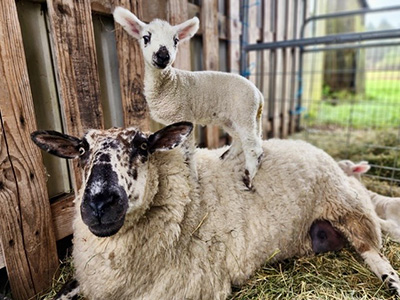
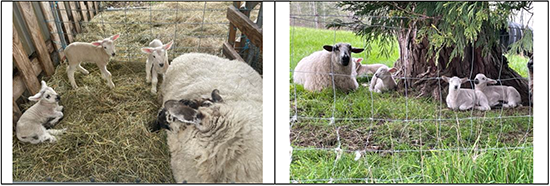
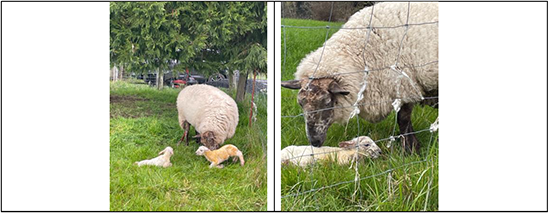
In between times, he will be watching the newborn lambs running in a furious and joyful scrum up the hill behind the barn, and then down the hill, and then up the hill behind the barn, and then - so much energy!
On your marks ... Get set ...
Strategic News Service (SNS) is a membership-based news organization providing the most accurate source of information about the future of technology as it drives the global economy. It is the publisher of the weekly SNS Global Report, which brings members predictive, deep-dive analysis at the intersection of tech, economics, and geopolitics. SNS hosts monthly virtual Spark salons, offering members access to its global network of leaders in business and industry and allowing them to capitalize on the insight and experience of the broader network. Annually, SNS releases CEO Mark Anderson's Top 10 Predictions for the coming year, which have a 95.3% publicly graded accuracy rating. Founded in 1995, the Global Report is read by industry leaders worldwide. Bill Gates has called it "the best thing I read." Copyright 2026 Strategic News Service LLC "Strategic News Service," "SNS," "Future in Review," "FiRe," "INVNT/IP," and "SNS Project Inkwell" are all registered service marks of Strategic News Service LLC. ISSN 1093-8494 | |