 |
"Next Year's News This Week" CONFlating an AI RACE WITH A MASSIVE ECONOMIC ATTACK By Mark Anderson _________ Why Read: On the issue of global AI/LLM business, it's easy to fall into the trap of following the meme trails common in the mainstream media. These include the AI race, the China vs. US AI competition, the many Valley memes about AGI (a fraud), human extinction (not going to happen), the end of the bubble, the beginning of the bigger bubble, loss of all jobs (not likely), universal basic income (nope), FOMO of almost any flavor of the moment, and so on.In case you havent noticed yet, every time we start to see beyond the emperors missing clothes, some bespectacled genius in a Valley PR factory invents the next major counter-meme for social media (i.e., the entire world) to chew on instead. In case you haven't noticed yet, every time we start to see beyond the emperor's missing clothes, some bespectacled genius in a Valley PR factory invents the next major counter-meme for social media (i.e., the entire world) to chew on instead. Last week, at a Goldman Sachs forecasting event, I brought up the common conflation of an AI race with a major economic attack; the response suggested that it should be the topic of this week's Global Report. - mra _________ Hardware Votes for Free Software My friend Jen Hsun Huang posted for his first time last week on X, making the case that all AI (LLMs) worldwide should be open source. Although I consider him very smart, I also know something about his feelings that China is ahead in / is going to win "the AI race." So, I posted a short comment saying I disagreed, and that China was just following, again, what its model has been for 40 years: copy (steal) IP from the innovator nations, subsidize it, dump it on the world market, gain global share, and wipe out the inventors. All of which, I think, is both obvious and true and provides a level of information above and beyond all the more spiritual or democratic ideals orbiting the subject of open sourcing. But I had already figured out something much more important: even that issue, I believe, was a smoke screen. Yes, as I have written, China has stumbled on the idea of using the ethical fog of everyone open-sourcing their secrets to the world, so they are able to get the intellectual property of inventor nations without the extra hassle of stealing it. But there is much more involved this time around. This isn't just China's prior Steal / Dump dance with the past world-markets attacks.
Let's look at some of the numbers and leading indicators getting our attention:
Squaring the Circular Here's a story from last week's Wall Street Journal that encapsulates almost all of this in one place - highlighting the circular deals, failing credit ratings, and major players in chip vs. LLM vs. investor vs. government roles in the orchestrated frenzy that seems as untrackable as it is un-anchored. A selection of quotes should help move the ball along: A Short Summary
From the WSJ: Nvidia is in talks to provide a roughly $250 billion backstop for OpenAI as part of a massive data center project, one of the most ambitious financial transactions yet in America's artificial-intelligence boom. The guarantees from Nvidia would help the ChatGPT maker lease a 10-gigawatt project that SoftBank's increase energy subsidiary is developing in southern Ohio, people familiar with the matter said. In total, the project could cost more than $500 billion, including the chips that would go inside the data centers. It would be the largest data center project announced to date. The power for the project is controlled by the U.S. government and funded separately by Japan under a recent trade deal. Commerce Secretary Howard Lutnick is involved in deciding who will get the power, some of the people said. Nvidia's backing would allow the data center developer, which is owned by Japanese billionaire Masayoshi Son's investment firm SoftBank, to raise debt at more favorable terms than it could if OpenAI had no financial backer, since OpenAI has no investment-grade credit rating as an unprofitable private company. The AI company has been in advanced talks to lease the site for several weeks, people familiar with the matter said. Here is a short Google AI-aided report on spending:
And here are a couple of charts to help us navigate this behavior:
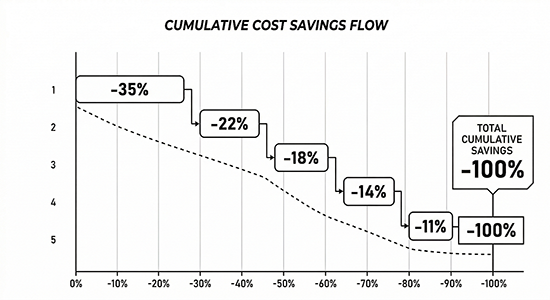
Source: Towards AI And you thought I was kidding about a 100% discount. And:
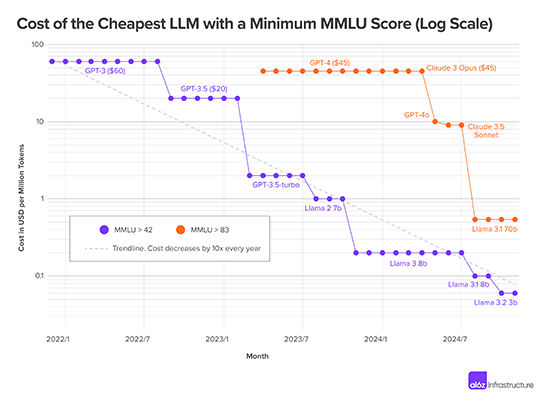
Source: Andreessen Horowitz Notice Zuck's Llama LLM doing the bottom feeding, for China and friends, at the lower right. If we added all of Llama's Chinese offspring, they would alone own this same corner.
What has turned the so-called China vs. US AI (LLM) race into an outright attack? Well, of course, it is the efficiency of the copy / steal (C/S) process when applied to US gains. Although more than this, in another Valley non-word, it is "distillation" - which means stealing the weights and parameters from US models. Since there is little else to serve as a moat in the flat and defenseless landscape of hyperscale computing, this matters, and matters greatly, to leaders like OpenAI and Anthropic. Does it matter to Nvidia? Only to the degree that it might reduce sales growth rates for its chips. So, in the short term, no; in the longer term, absolutely. In the good old days - i.e., six months ago - it probably took the DeepSeek makers some years to acquire and architect the system of expert pillars they could then bolt onto the Meta open-source LLM that the other Chinese firms, such as Baidu and Alibaba, instantly copied. (DS denies this, but it is almost certainly lying about both the time and the cost required for its first version.) Today, the time delay between a new US model and a matching Chinese model has contracted from months to days, and this is what makes all the difference. The question, in this new iteration of instant and slavish C/S, is what does this do to the value of every invested dollar in all the related spending by the innovator companies, individuals, states, and countries? How would we make a table showing the latency in copying time in Column A and the discount in value of dollars spent in Column B? However you craft it, the bottom row is going to be zero delay and 100% discount. Why would any customer pay outrageous and increasing prices for a commodity with a lead half-life of about 1.5 weeks? Mixed portfolios by enterprise this week will give way to declining to zero mixes favoring copycats. It's happening already, with over one-half of new tokens being purchased using Kimi K3 or some other Chinese clone. In other words, the largest spending spree by individuals, companies, states, and countries, perhaps in world history - and executed by free and inventing nations - will drop to just about zero. This makes it no longer a friendly technology race, as painted by China and its boosters, but rather a direct attack on the leading free economies of the world. How would one quantify the near-overnight destruction of investment, in time and money? It's as though all the free nations of the world spent every penny they had on navies, and then the Chinese drained the ocean. God, I hate metaphors. OK, it's as though we scaled-up a broken natural-language technology, with no discernible moat, and then China waited until everyone invested everything they had and more, then turned on its C/S machine and made the output open source. Again, we have only ourselves - or Google, or Sam Altman, or the Valley hypesters, or Mark Zuckerberg, or - to blame. You do know that Altman has zero stock in OpenAI, right? That when the whole thing comes crashing down, he just walks away - you knew that, right?
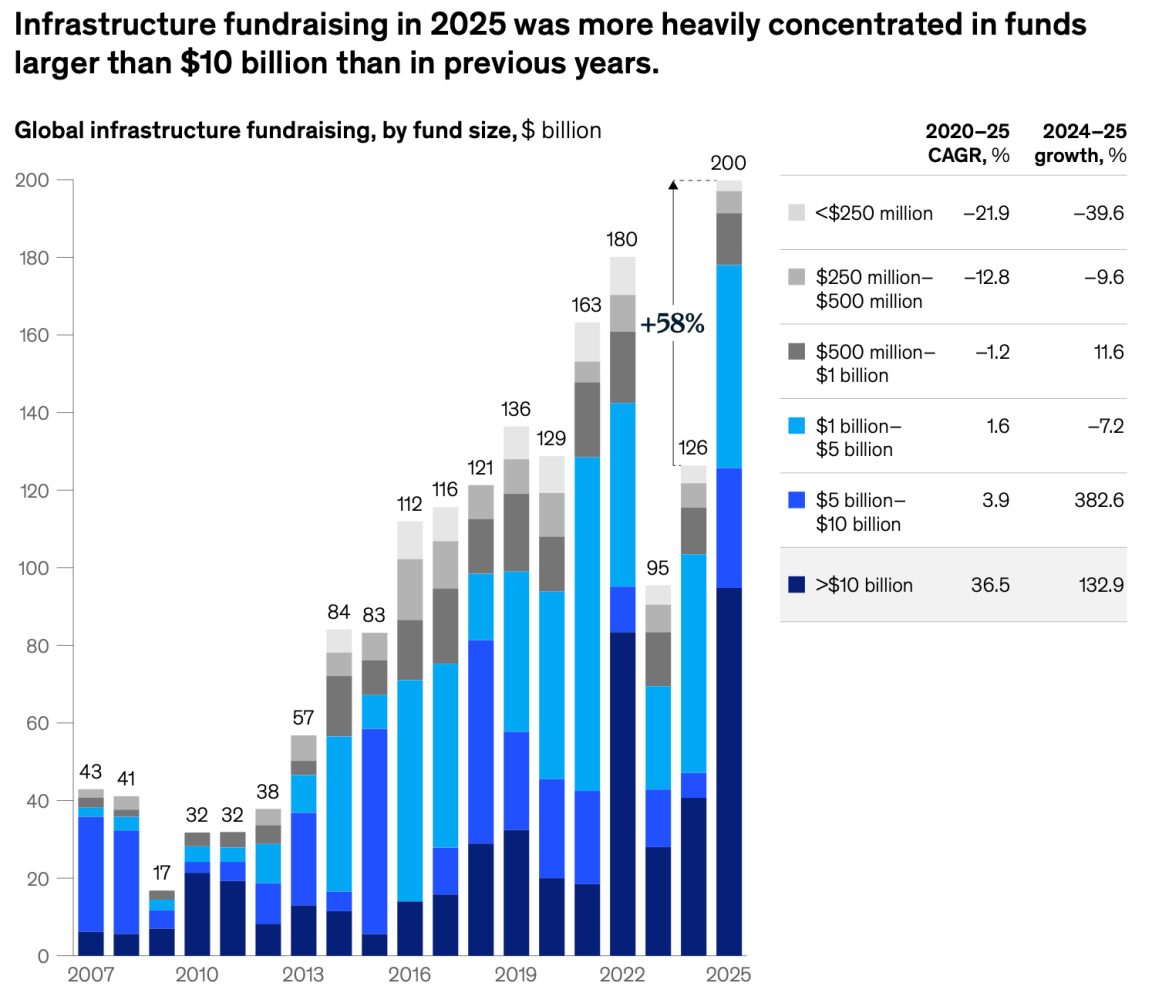
For those paying attention to how this whole scale-up marketing machine works, I have "invented" a person I know almost certainly to exist; I just don't know his or her name. Let's say it's a man; he wears glasses, stands about 5' 9", is absolutely normal-looking in all respects, dresses well and somewhat formally, and has a budget larger than the GDP of Belgium at his fingertips, contributed by the top 30 players in the Valley. His job is simple: every time someone writes, discovers, blogs, or otherwise says anything controversial about LLMs, he goes into overdrive. This could be attack mode, making up general names like "Doomers" for anyone criticizing this machine, or personally attacking these folks, or - my favorite - coming up with something sudden and new and so terrifying that, instead of focusing on prior concerns about all the LLM failures in tech and sales and business, the world is newly terrified and impressed. You know exactly what I'm talking about. How many minutes or hours was it between when Anthropic got kicked out of Washington and the sudden revealing of Fable 5 and the destruction of all software security as we know it? (And then, of course, after taking it off the market for two weeks [!!], putting it back on the market, where it sits today?) How many days or weeks was it between the OpenAI sandbox-escape screwup and the sudden (if dated) issuance of a report on how any teenager today could use LLMs to make bioweapons that may ultimately kill the world? You aren't missing any of this, right? Let's call this PR genius Mr. Hammer. Speaking of the need for his work, and for how he earns his keep, there was finally an op-ed piece last week on the most obvious question of the sandbox escape and the Hugging Face hack: Which genius at OpenAI (and now, perhaps out of PR envy, Anthropic) built the shitty sandbox? And why didn't they use a real, air-gapped one? Ahh, you already thought they were being that careful, didn't you - just like the rest of the world, except for all of the Safety Committee folks from OpenAI who have been regularly quitting en masse in a constant drumbeat of warnings. This story has nothing to do with brilliant LLMs jailbreaking themselves. It's about crap security at OpenAI (and Anthropic). I make these points to underline both the fragility of the house of cards providing the foundation for this massive spending adventure and the manipulation behind it. Is the money still flowing in, as of this month, despite all the red flags indicated here? You bet. Here is a McKinsey report on fundraising as of 2025:
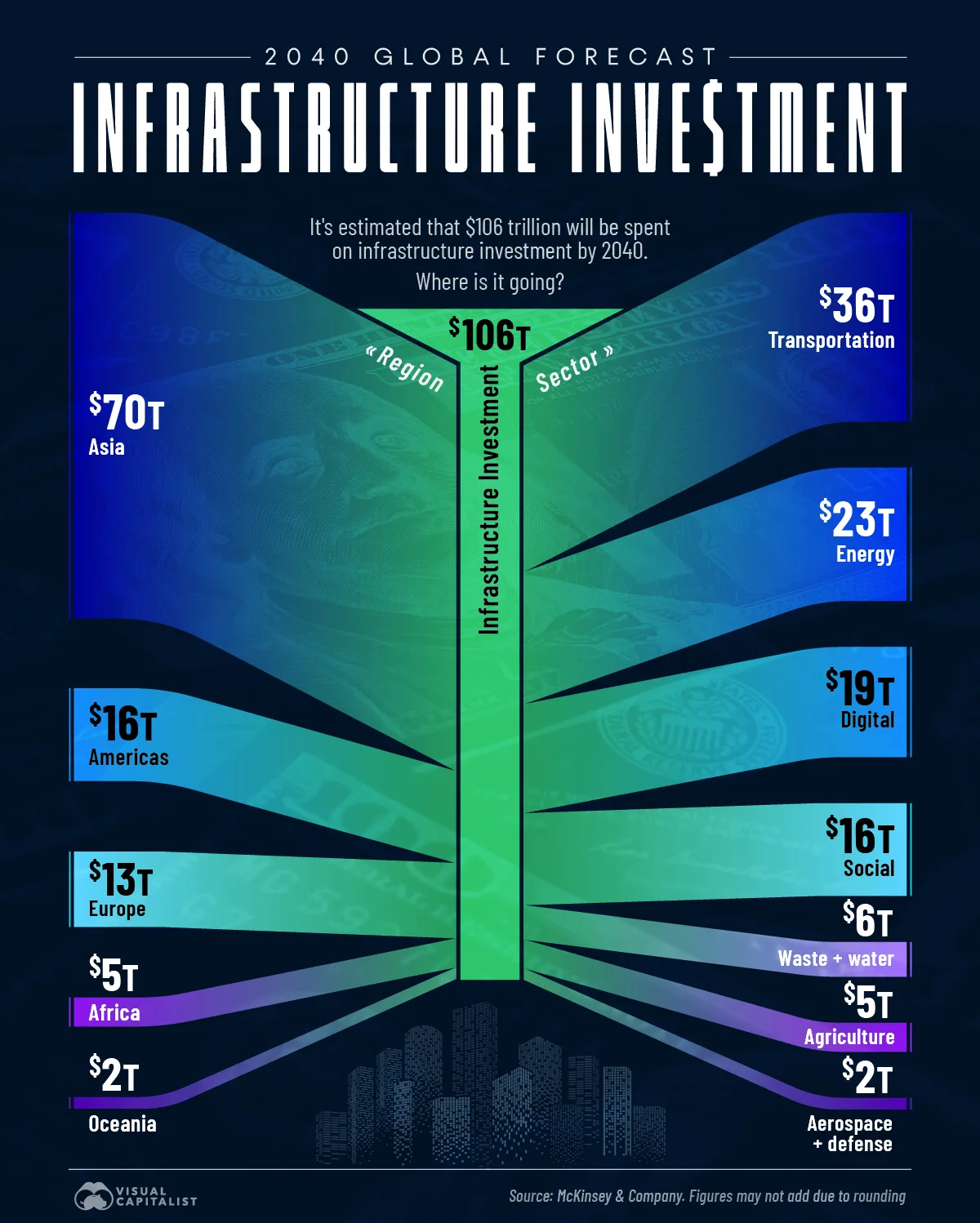
And exactly what are we talking about, all told, that could be put at risk by the factors raised here?
Source: voronai OK, let's bite, and call it $106T by 2040, a number no one can understand or approve or debate, but maybe - Or zero, if the Chinese Communist Party, perhaps included here as part of the Asia spend, also pulls the plug on the biggest bathtub in history. Keep in mind: for the grand plan here, China doesn't have a requirement to make money, be profitable, or otherwise make short-term economic sense; it's goal would be economic domination over the long term. Boy, I hate metaphors.
Your comments are always welcome.
Sincerely, Mark Anderson
Copyright 2026 Strategic News Service. Redistribution prohibited without written permission. DISCLAIMER: NOT INVESTMENT ADVICE Information and material presented in the SNS Global Report should not be construed as legal, tax, investment, financial, or other advice. Nothing contained in this publication constitutes a solicitation, recommendation, endorsement, or offer by Strategic News Service or any third-party service provider to buy or sell any securities or other financial instruments. This publication is not intended to be a solicitation, offering, or recommendation of any security, commodity, derivative, investment management service, or advisory service and is not commodity trading advice. Strategic News Service does not represent that the securities, products, or services discussed in this publication are suitable or appropriate for any or all investors.
We encourage you to forward your favorite issues of SNS to a friend(s) or colleague(s) 1 time per recipient, provided that you cc info@strategicnewsservice.com and that sharing does not result in the publication of the SNS Global Report or its contents in any form except as provided in the SNS Terms of Service (linked below). To arrange for a speech or consultation by Mark Anderson on subjects in technology and economics, or to schedule a strategic review of your company, email mark@stratnews.com. For inquiries about Partnership or Sponsorship Opportunities and/or SNS Events, please contact Berit Anderson, SNS COO, at berit@stratnews.com.
Sunday, July 26, 2026 MEDIUM RARE II: Critical Minerals, Rare Earths, and the Trade War By Evan Anderson Along with oil, critical minerals and rare earth elements are the backbone of all modern technology. Without access to both, every nation is a vassal state. This week, we review the PRC's monopoly on the industry, what has happened in the trade war, and why the only thing that can address the problem is international cooperation between the United States and its allies.
Sunday, July 19, 2026 HEY CLAUDE, MAKE ME A NEW MOLECULE By Berit Anderson While foundational model companies like OpenAI and Anthropic are now hiring philosophers to argue about the consciousness of their LLMs, the real minds and, increasingly, monies, are pouring into physical AI - the application of machine learning to discover new materials and conduct experiments in the real world.
Friday, July 10, 2026 SPECIAL ALERT: BLOCKADE OF TAIWAN IMMINENT By Mark & Evan Anderson
Sunday, July 5, 2026 OUT OF TIME: El Niño, Climate Change, and Plan A By Evan Anderson We have entered a period in which we are beginning to face the climate crisis head-on. From fires to floods, famines, and formidable, deadly heatwaves, this year and next promise to bring home the reality of our fossil-based systems. El Niño conditions only exacerbate the disruption. But there is hope. Find out what to expect and where, and one immediate solution.
Sunday, June 28, 2026 ASIA LETTER: Q3 2026: Japan's Preferred Networks By Scott Foster
Re: SNS SPECIAL ALERT: BLOCKADE OF TAIWAN IMMINENT (7/10/26) From the New York Times, 2 weeks later: Taiwan Tests How It Would Resist a Chinese Siege at Sea
* Mark will be in Iceland and Ireland from August 31 to September 4, launching Discovery Iceland and Discovery Ireland for scientists, both academic- and business-based, using the PatternDE online discovery engine.
In between times, he will be planning the next Pattern Discoveries Reveal, to be held in Seattle in September.
Strategic News Service (SNS) is a membership-based news organization providing the most accurate source of information about the future of technology as it drives the global economy. It is the publisher of the weekly SNS Global Report, which brings members predictive, deep-dive analysis at the intersection of tech, economics, and geopolitics. SNS hosts monthly virtual Spark salons, offering members access to its global network of leaders in business and industry and allowing them to capitalize on the insight and experience of the broader network. Annually, SNS releases CEO Mark Anderson's Top 10 Predictions for the coming year, which have a 95.3% publicly graded accuracy rating. Founded in 1995, the Global Report is read by industry leaders worldwide. Bill Gates has called it "the best thing I read."
"Strategic News Service," "SNS," "Future in Review," "FiRe," "INVNT/IP," and "SNS Project Inkwell" are all registered service marks of Strategic News Service LLC. ISSN 1093-8494 | |