 |
"Next Year's News This Week" Can bioelectricity keep us alive? By Berit Anderson _______ Why Read: In this follow-up to my November 8 Global Report on bioelectricity, we look into the field's commercial potential for the treatment of aging, cancer, and birth defects. - bba _______ In the world of tech billionaires, there's perhaps no topic more popular than longevity science. Just about everyone, it turns out, wants to live forever. Or at least everyone building the future of technology. Braintree founder Bryan Johnson is now known more for his obsessive documenting of his anti-aging regimen than for his entrepreneurialism. Palantir chair Peter Thiel and OpenAI CEO Sam Altman reportedly take metformin daily to help lower their blood sugar levels and increase their metabolism in the name of life extension. And Amazon's Jeff Bezos has invested in the buzzy Altos Labs - a company focused on what it calls "cellular rejuvenation," introducing specific molecules into cells that revert them to stem cells in an effort to fight off disease. Many biological factors have been found to affect aging; in addition to stem cells, the microbiome, telomeres, and hormonal fluctuations have all been tied to some of the negative effects of aging. But, as I recently reported in these pages, Tufts professor Michael Levin's research takes us down a different path entirely: What if cells simply get bored after they're done creating something? And if that's the case, can we use bioelectricity to refresh that end state? If you missed my last Global Report, "SNS: The Future of Life Is Electric," on Levin and the basic science and implications of bioelectricity, I recommend reading it for a full rundown. But the TLDR of it is that, according to research at Levin's Tufts lab, cells use electricity to create shared blueprints for what they will become - a system that works independent of DNA and RNA. (Levin has described DNA as the "hardware" of living cellular systems and bioelectricity as the "software.")
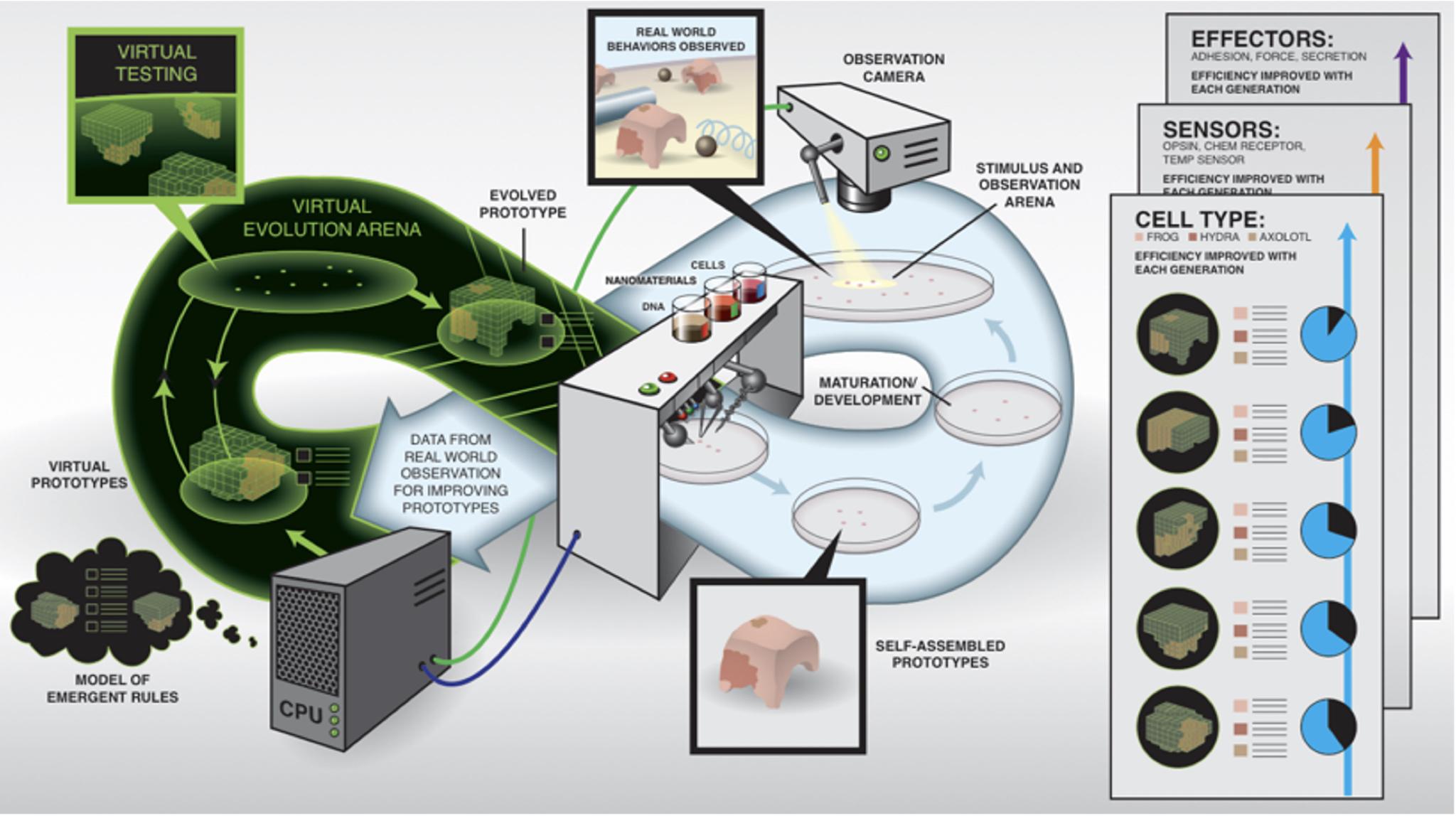
In a January 2026 podcast interview with Tim Ferris, Levin explained that his research has uncovered some very unexpected outcomes in regard to aging and cells [light transcript edits by SNS for flow]: First of all, one of the things that we've seen is that ... [o]ver time, the electrical pre-patterns that tell the cells and tissues what large scale structure they're supposed to look like, they get fuzzy, they degrade over time. [...] Now, one question you might ask is why over time are these things getting fuzzy, what's going on? There are a couple of schools of thought. One is that this is the consequence of accumulated noise and damage, so molecular damage entropy, basically. Over time, you just accumulate damage, and everything kind of gets degraded over time. And then there's also these kinds of - what they call programmatic theories, where basically the idea is that you're programmed to age. For whatever reason, evolution has favored a decline and death. We have an interesting third alternative to offer, which is the following: We did a simulation experiment where we had a virtual body where the cells cooperate together to build an embryo, and they work really hard to work together. They build to a particular pattern memory, so this thing I've been telling you about, they build. And then I said, "Let it run. Just leave it alone and let it run." And what you see is something very interesting. They work really hard together, and they make the correct body. Then it stays that way as they defend it, and then it falls apart, and it begins to degrade. Now what's interesting is that, in our simulation, there was no evolution for a limited lifespan, there was no noise, there was no damage; it was perfect, everything was perfect, and still it degraded. Why would it do that? [...] What I took away from that work that we did was the following: you have a goal-seeking system that has met its goal. [...] but what does a goal-seeking system do when there are no new goals? Because we're looking at a system that may or may not be able to give itself new goals. I mean, cognitively, I think we can, but it's not clear yet that this system can do that. And so what we were able to do is to give it new goals by having interventions and going back in and saying, "Okay, now this is your new pattern," and it will do that. You could call it the "boredom theory" of aging, basically. [...] The cells don't degrade; the collective does - the cohesion, the alignment between them, because there's no longer a common goal. I mean, this is what makes for an embryo or a body, as opposed to just a billion independent cells, is they're all aligned toward the same set point, toward the same goal. It's a fascinating discovery. Could it be that reminding our cells of our biological blueprint would be enough to significantly slow aging? What would be the impacts of life extension in a finite world? But fascinating does not always equal commercially viable - especially in medical innovation, which requires long runways for clinical trials in animals first, then humans, and eventually followed, if all goes well, by FDA approval. It's an unfortunate side effect of the merger between academia and business. Many a brilliant research breakthrough has withered on the vine in the garden of venture capital. Levin has co-founded at least four companies based on the principles of bioelectricity. Two - Anthrobots and Cellja Vu, created under the umbrella of scientific incubator Astonishing Labs - currently seem primarily to be entities in name only. Another, Fauna Systems, is developing "tiny, biodegradable biobots that can move, sense, respond to their surroundings, and then safely break down afterward," according to its website. "We're exploring where these capabilities unlock value in complex environments where chemistry, machinery, and traditional automation fall short." The company is a collaboration with co-founder Joshua Bongard at the University of Vermont and is currently being run by CEO Naimish Patel. More from the website: Designing and building a biobot.AI-driven design: A specialized large language model hypothesizes millions of potential configurations that might meet a given set of requirements, generating digital twins of each configuration and its resulting behaviors. Prototype assembly: Target body configurations are assembled in a wet lab according to the architecture of the most promising digital twins. Fitness evaluation: The capabilities of each configuration are tested against the original requirements. Error correction: Promising models are optimized and refined; less promising configurations are discarded. Iteration: The process repeats until the desired capabilities are achieved.
Source: https://www.faunasystems.com/science
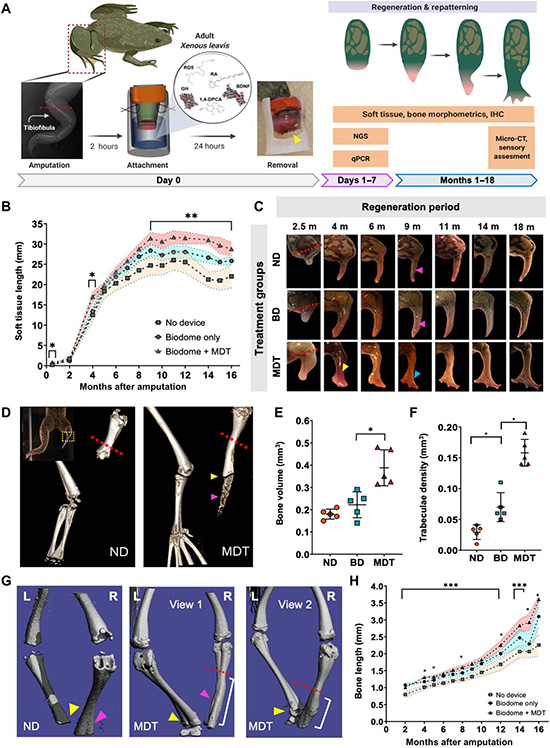
The Brightest Bulb in the Pack The most advanced of Levin's crop of companies is Morphoceuticals, which he co-founded with Tufts professor David Kaplan in 2023 after the two successfully regenerated the limb of an African clawed frog. It was, according to Morphoceuticals' website, "the first [experiment] to achieve functional limb regeneration in an adult animal of a species that does not naturally regenerate complex limbs in adulthood." Notably, the pair were able to regrow the frog's rear leg, including its full functionality, by applying a drug combination for just 24 hours, encased in Kaplan's bioreactor technology, which modified the cells' gap junctions and ion channels:
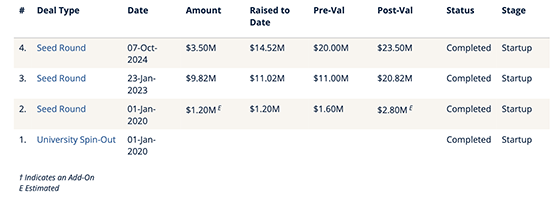
Source: https://www.science.org/doi/10.1126/sciadv.abj2164?referrer=https%3A%2F%2Fwww.google.com%2F Now the company is developing drug applications to alter cellular blueprints in order to regenerate tissue, limbs, and organs. "There's a huge need for people with birth defects, traumatic injury, cancer, aging, degenerative disease, all of these things," Levin told the Tufts Daily in March 2023. "I get phone calls and emails every week from people in the most unbelievable medical scenarios. People with kids who have birth defects, spinal cord injuries, lost limbs, cancer." According to the same Tufts Daily piece, the team initially set out to focus on computing drug combinations intended to improve the health of amputee stumps. It was a smart business move at the time - working in a space with lots of demand and no real competitors, rather than trying to leap headfirst into life extension, which has a much higher barrier to entry and tends to generate a lot of scrutiny but not much funding. As one pointed MedPath article explained: "The US Interventions Testing Program, which discovered or validated many promising anti-ageing drugs in mice - including rapamycin, metformin, acarbose, canagliflozin, and senolytic drugs that clear out aged cells - runs on an annual budget that is only about twicewhat Bryan Johnson spends on his health every year." Since Morphoceuticals' founding in 2020, the team has raised $15 million in three rounds, led by Prime Movers Lab and Juvenescence, a competitor in the longevity space. Levin said in 2023 that the funding would primarily be used to recruit experts in the FDA approval process, possibly including current CEO Jim Jenson.
Source: Pitchbook That being said, its last tranche of $3.5M in 2024 seems liable to be nearly gone; in the world of biomedical startups, a million a year would be a low-to-normal burn rate. Jenson, in his great wisdom, seems to have pivoted the pitch from amputee stump treatment to bioelectrome atlas. The concept, which aligns machine learning and bioelectrome data, could provide a basis for the treatment of a much broader range of applications - including disease and cancer treatment and a general attack on aging. "We're using our world-first suite of model systems and proprietary artificial intelligence techniques," Jenson told industry publication GEN. "Development of the atlas requires us to employ the tools of multiomics, electrophysiology, and machine learning to generate a voltage atlas of the body and a map of its druggable components." It's a more fundable conceit in the VC world - and one that could lay the groundwork for a much broader application of bioelectrical currents in the fields of both cancer treatment and life extension. The research itself is truly groundbreaking. Here's hoping for enough patient capital to bring it to fruition.
Your comments are always welcome.
Sincerely, Berit Anderson
Copyright 2026 Strategic News Service. Redistribution prohibited without written permission. DISCLAIMER: NOT INVESTMENT ADVICE Information and material presented in the SNS Global Report should not be construed as legal, tax, investment, financial, or other advice. Nothing contained in this publication constitutes a solicitation, recommendation, endorsement, or offer by Strategic News Service or any third-party service provider to buy or sell any securities or other financial instruments. This publication is not intended to be a solicitation, offering, or recommendation of any security, commodity, derivative, investment management service, or advisory service and is not commodity trading advice. Strategic News Service does not represent that the securities, products, or services discussed in this publication are suitable or appropriate for any or all investors.
We encourage you to forward your favorite issues of SNS to a friend(s) or colleague(s) 1 time per recipient, provided that you cc info@strategicnewsservice.com and that sharing does not result in the publication of the SNS Global Report or its contents in any form except as provided in the SNS Terms of Service (linked below). To arrange for a speech or consultation by Mark Anderson on subjects in technology and economics, or to schedule a strategic review of your company, email mark@stratnews.com. For inquiries about Partnership or Sponsorship Opportunities and/or SNS Events, please contact Berit Anderson, SNS COO, at berit@stratnews.com.
Sunday, November 15, 2026 CLEAN TECH: Cracking the Chinese Chokehold on REEs & Precious Metals By Evan Anderson China maintains a stranglehold on rare earth elements and precious metals. It does not appear to have any interest in returning to an era of steady supply to the US. Last year in these pages, we covered what could be done to increase the global supply of these resources. This week, we cover ways in which new companies are reducing the need to use REEs, cobalt, and lithium in the products required for a modern economy, military, and solution to the climate crisis.
Sunday, November 8, 2026 THE FUTURE OF LIFE IS ELECTRIC By Berit Anderson Hundreds of years into the development of human biology as a discipline, we're still just beginning to discover how life works. This week's Global Report takes you inside the emerging role of bioelectricity in dictating the advancement of life, aging, and human development.
Sunday, November 1, 2026 By Mark Anderson While many of us see through yesterday's glasses, using our views of ethics, morality, and perhaps service to understand the world, it would appear that things are changing very quickly. The map of the Next World may well be drawn by dictators - including our own - in a global new version of "The Great Game" crossed with the Trump / Monroe Doctrine. Read on to see if this makes sense to you.
Sunday, October 25, 2026 THE LONG BETRAYAL: RUSSIA, TRUMP, MUSK, AND HOW WE GOT HERE By Evan Anderson This week, we examine why the ties between the Trump administration, those who aid and abet its criminal activity, and Russian intelligence, government, and money are a "clear and present danger" to US national security. Read on for a description of Russian tactics for gray-zone, information, and psychological warfare; the blatant cooperation between our administration, Putin, and the KGB/FSB; and what to expect next, as these forces move to finalize the permanent reduction of the American state.
Strategic News Service (SNS) is a membership-based news organization providing the most accurate source of information about the future of technology as it drives the global economy. It is the publisher of the weekly SNS Global Report, which brings members predictive, deep-dive analysis at the intersection of tech, economics, and geopolitics. SNS hosts monthly virtual Spark salons, offering members access to its global network of leaders in business and industry and allowing them to capitalize on the insight and experience of the broader network. Annually, SNS releases CEO Mark Anderson's Top 10 Predictions for the coming year, which have a 95.3% publicly graded accuracy rating. Founded in 1995, the Global Report is read by industry leaders worldwide. Bill Gates has called it "the best thing I read."
Copyright 2026 Strategic News Service LLC "Strategic News Service," "SNS," "Future in Review," "FiRe," "INVNT/IP," and "SNS Project Inkwell" are all registered service marks of Strategic News Service LLC. ISSN 1093-8494 | |